
Whales of Húsavík

Blue Whale
Balaenoptera musculus (Linnaeus, 1758)
-
Worldwide but patchy distribution
Extra-large size, slender body
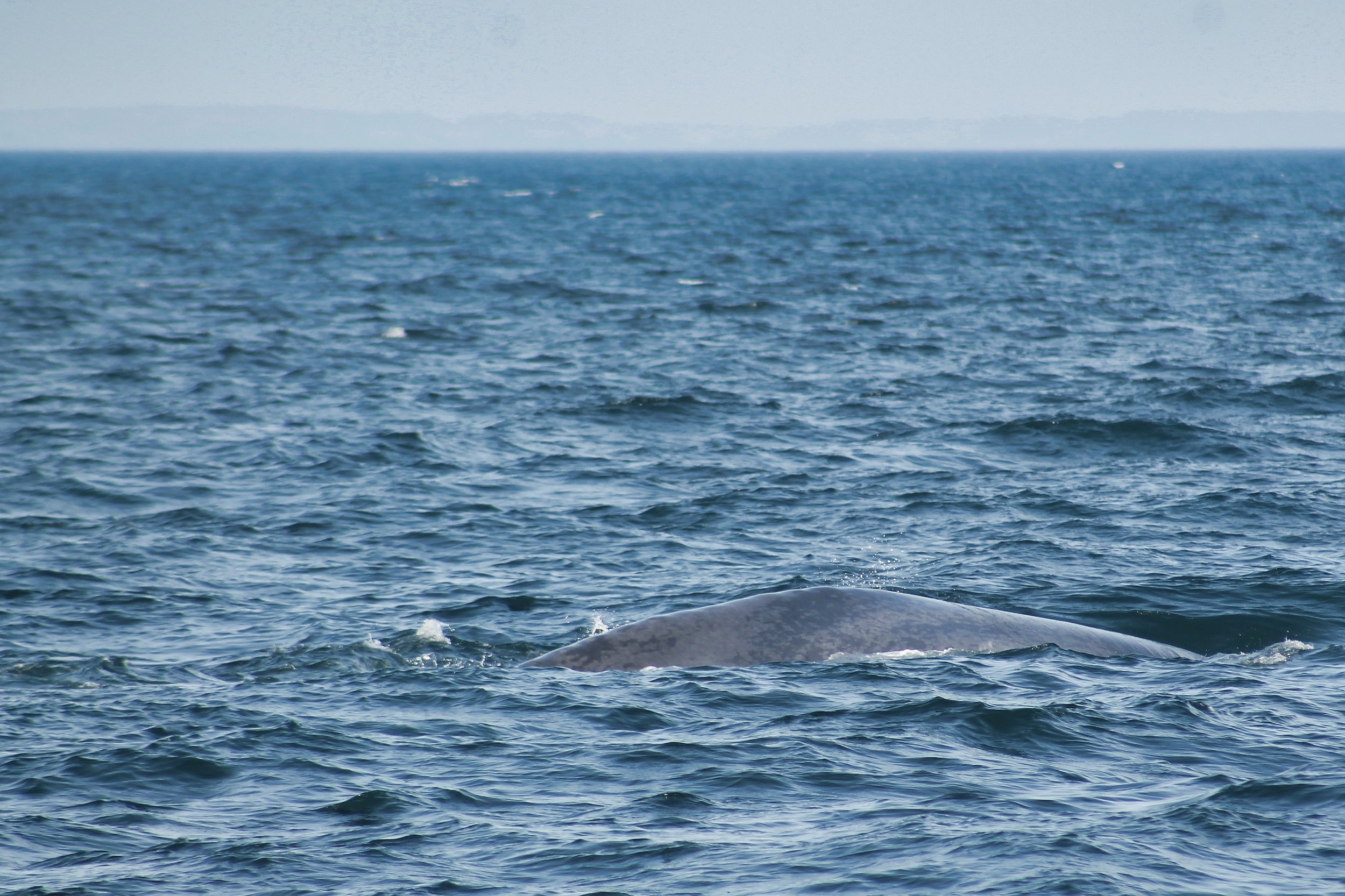
Mottled bluish-grey body colouration, often looking turquoise when viewed underwater from the surface
Relatively small dorsal fin (up to 35 cm tall) three-quarters of the way along back
Prominent splash guard immediately in front of blowholes
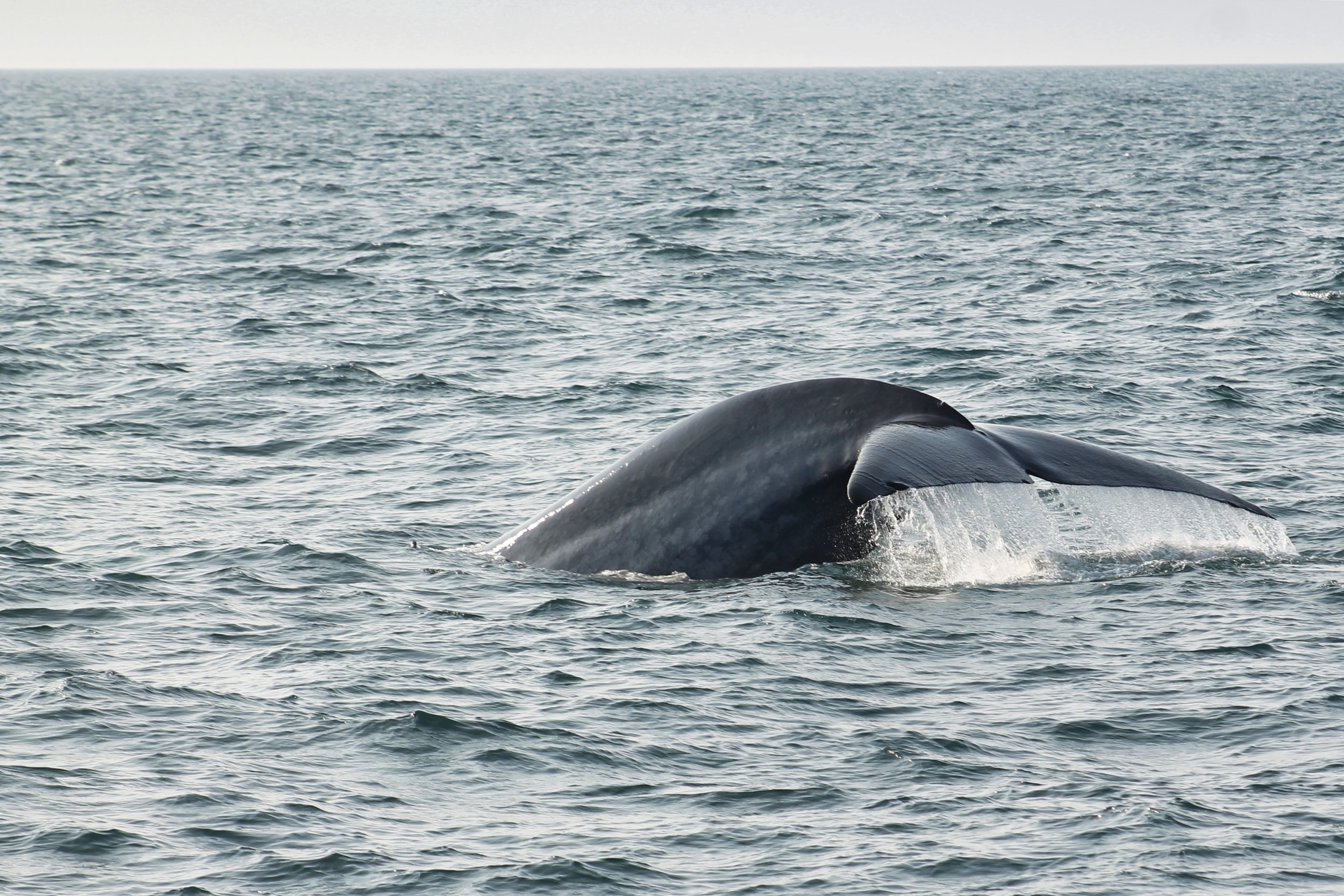
Extremely deep tailstock
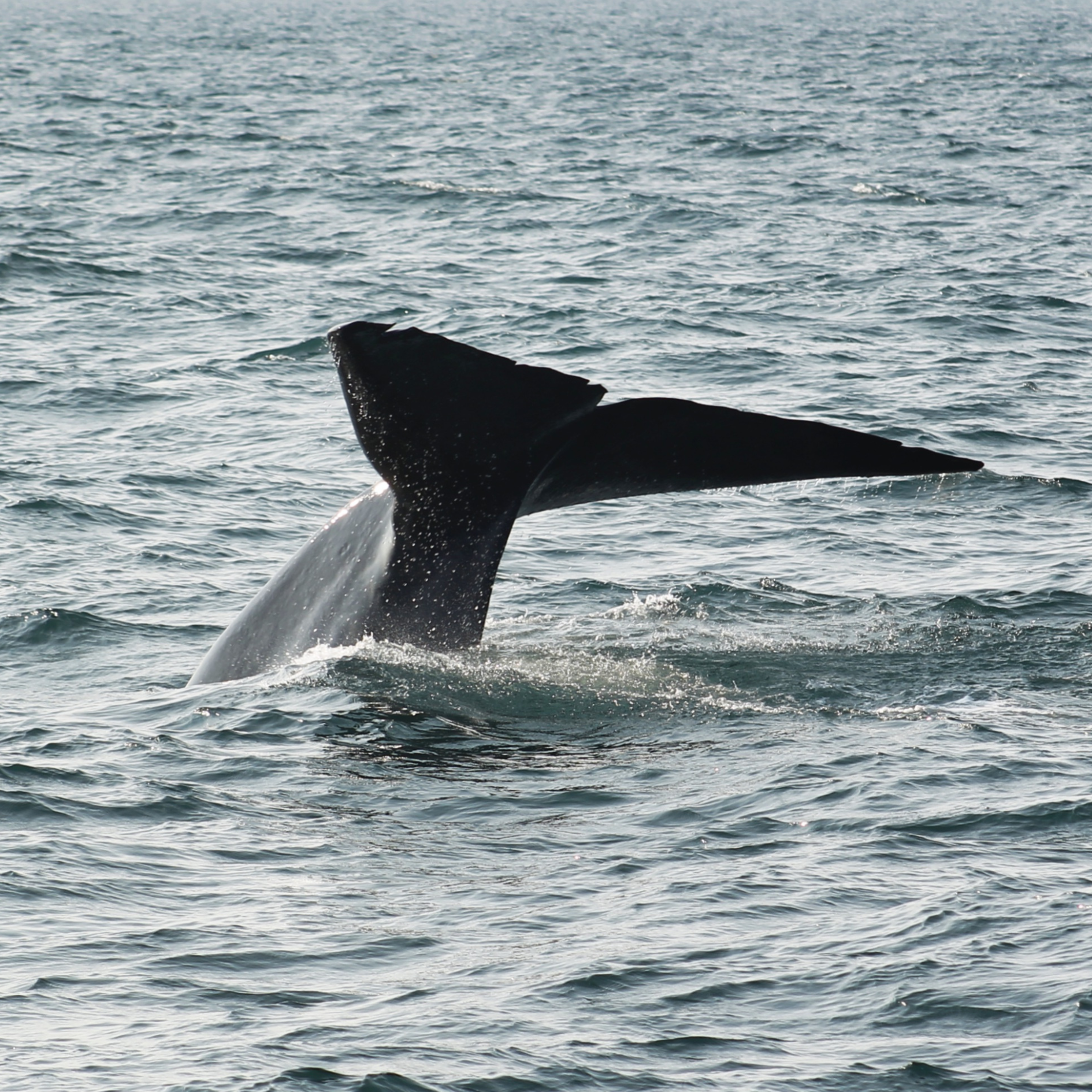
Might fluke (show tail) when diving
In Iceland, the subspecies of blue whale commonly sighted is generally referred to as Northern Blue Whale (Balaenoptera musculus musculus)
-
Up to 30 m and 200 tonnes.
On average:
• Male: 23 to 26 m
• Female: 24 to 27 m
• Approximate weight for both sexes: 150 tonnes
-
Feeding dives are typically 8–15 minutes
20 minute dives are not uncommon in the daytime
The maximum recorded dive time is 36 minutes
-
At least 65 years
The oldest recorded individual was 110 years
-
IS: Steypireyður
DE: Blauwal
FR: Rorqual bleu
IT: Balenottera azzurra
ES: Ballena azul
PT: Baleia-azul
PL: Płetwal błękitny
Blue Whales in Iceland
The blue whale (Balaenoptera musculus) is the largest animal ever known to have lived, reaching up to 30 metres in length and weighing around 200 tonnes. And yet, despite that size, it can be surprisingly difficult to see. It does not crash through the surface like a humpback or rush past like a dolphin. It moves slowly, deliberately, revealing itself piece by piece.
In Iceland, blue whale sightings are most likely in early summer, particularly in June, when Skjálfandi Bay becomes one of the most productive feeding areas in the North Atlantic. The mixing of cold and warm currents brings nutrients to the surface, triggering plankton blooms. These support dense concentrations of krill, tiny crustaceans that blue whales depend on.
Feeding is an extraordinary process. A blue whale dives beneath a layer of krill and then accelerates upward, opening its mouth to engulf an enormous volume of water, sometimes up to 65 tonnes in a single lunge. It then closes its mouth and forces the water out through its baleen plates, trapping the krill inside. On a good day, an adult can consume up to 4 tonnes of food.
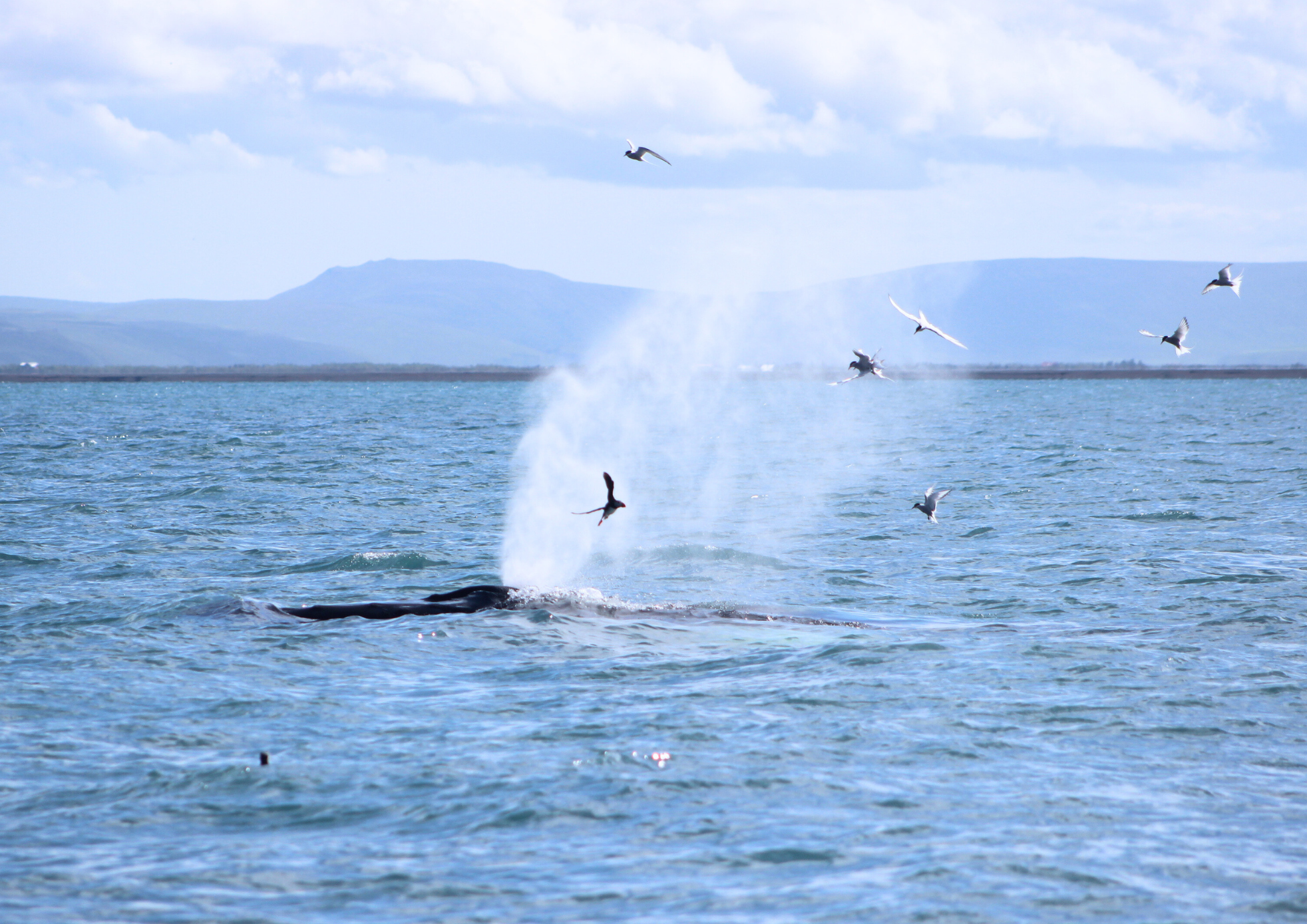
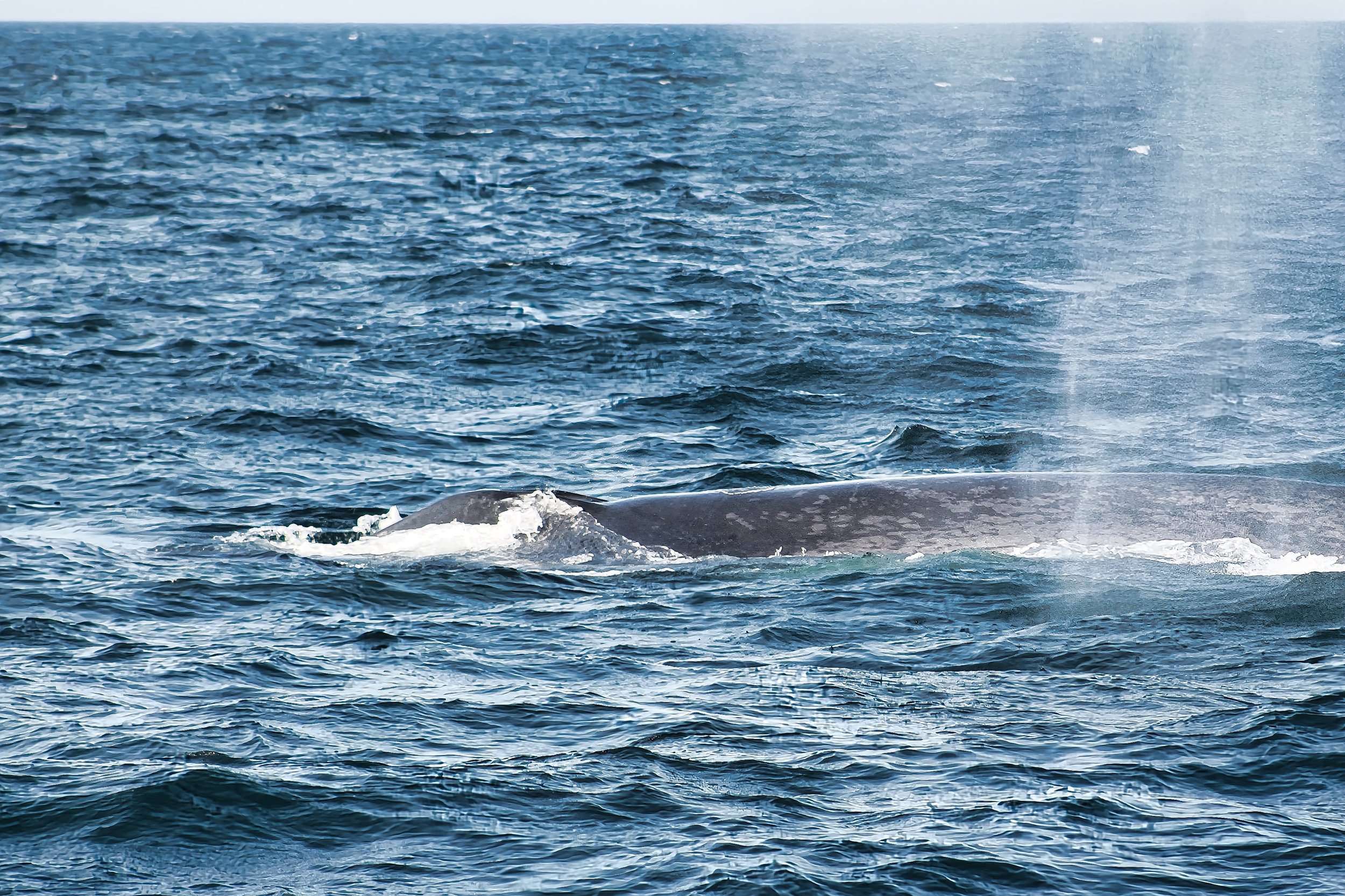
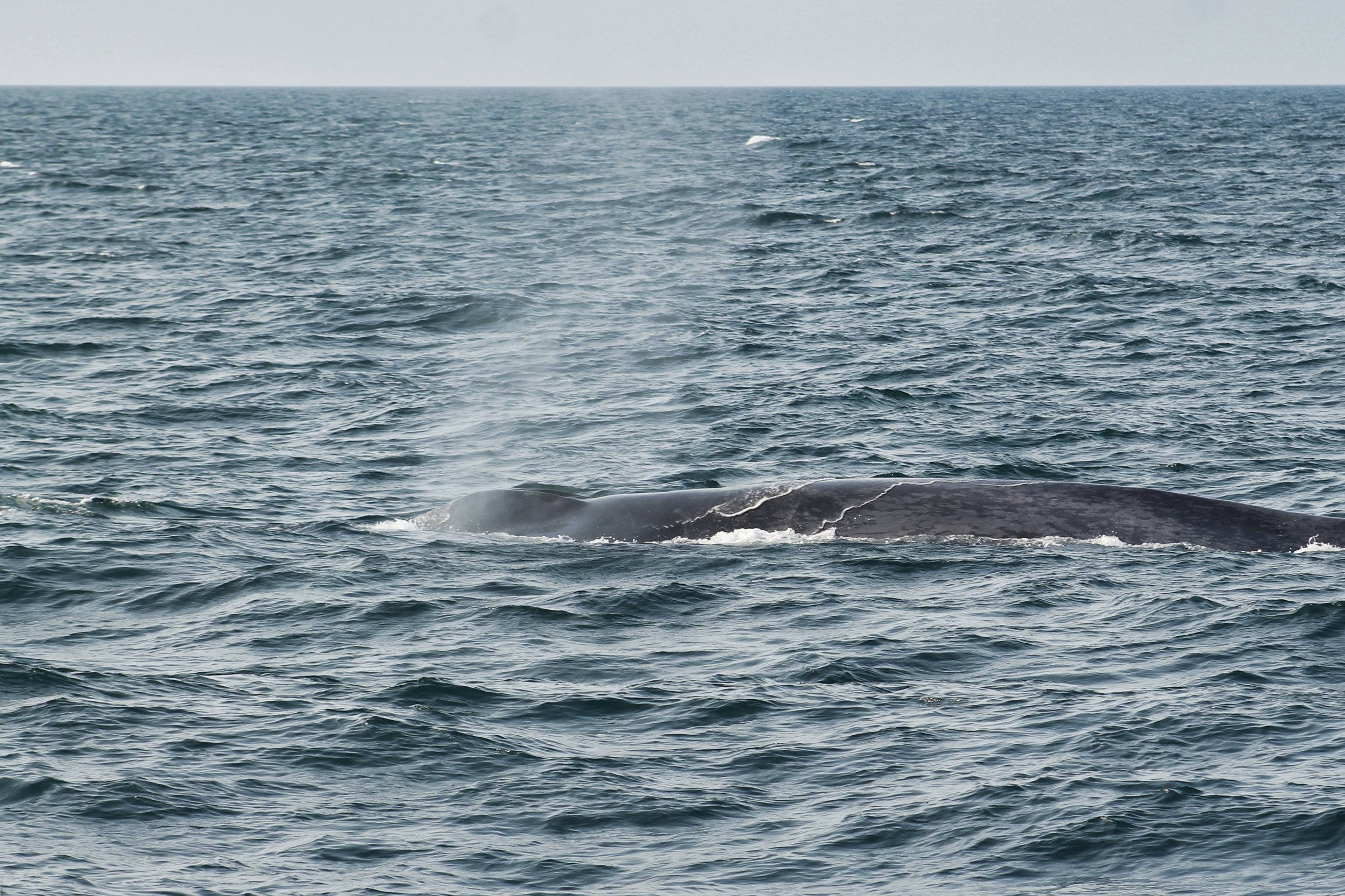
At the surface, their behaviour follows a rhythm. The blow comes first: tall, straight, and unmistakable, often reaching 10 to 12 metres. Then the long back rolls into view, seemingly endless, until finally the small dorsal fin appears far behind. They may surface several times before a deeper dive, which can last anywhere between 8 and 15 minutes, sometimes longer. Unlike humpbacks, they do not always raise their flukes.
Blue whales are usually seen alone or in pairs, although in highly productive conditions, loose feeding aggregations can form. Their movements are not fully understood, and unlike many baleen whales, they are believed to feed year-round rather than fasting during migration.
Beneath the surface, they are anything but silent. Blue whales produce extremely low-frequency sounds—some of the loudest in the animal kingdom—capable of travelling across entire ocean basins. These calls are thought to be used for communication, navigation, and possibly locating feeding areas.
Seeing a blue whale in Skjálfandi Bay is not just a sighting, it’s a shift in perspective. A reminder that even in a bay that feels vast, something far larger is moving beneath the surface.