
Whales of Húsavík
Fin Whale
Balaenoptera physalus (Linnaeus, 1758)
-
Worldwide distribution
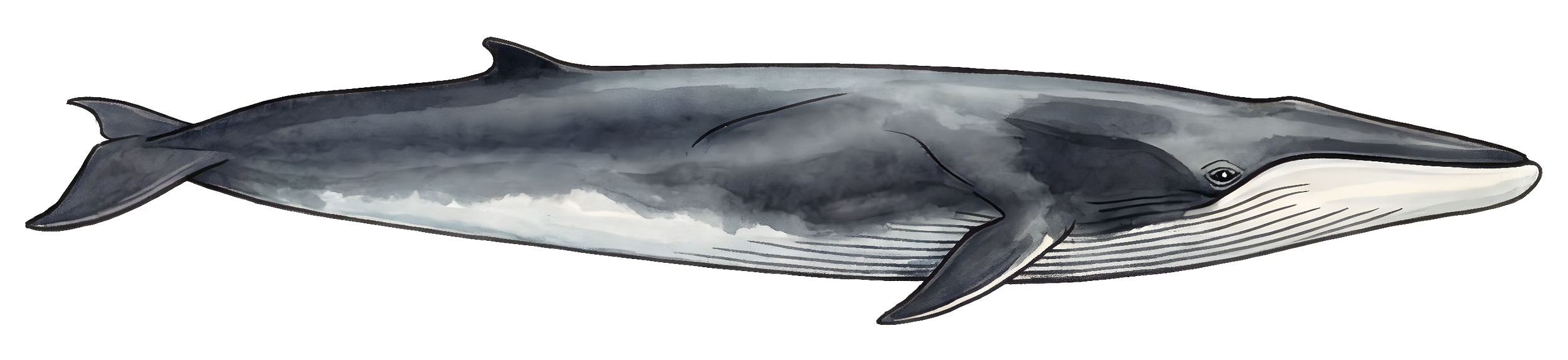
Dark grey or brownish-grey upper side
Distinctive asymmetrical pigmentation on the lower jaw - largely dark on the left and white on the right
Extra-large size, though sleek and more streamlined than the blue whale
Light grey V-shaped chevrons on back
Single prominent ridge on rostrum
Tall and falcate dorsal fin (up to 60 cm)
Rarely raises flukes on diving
Alone, in pairs or in small groups
In Iceland, the subspecies of fin whale commonly sighted is generally referred to as Northern Fin Whale (Balaenoptera physalus physalus)
-
On average:
Males: 18–22 m
Females 20–23 m
Approximate weight for both sexes: 40–50 tonnes
-
Dive time is typically 3–10 minutes
Longest recorded dive time is 25 minutes
Rarely shows fluke when diving
-
At least 80–90 years
The oldest recorded individual was 114 years
-
IS: Langreyður
DE: Finnwal
FR: Rorqual commun
IT: Balenottera comune
ES: Rorcual común
PT: Baleia comum
PL: Płetwal zwyczajny
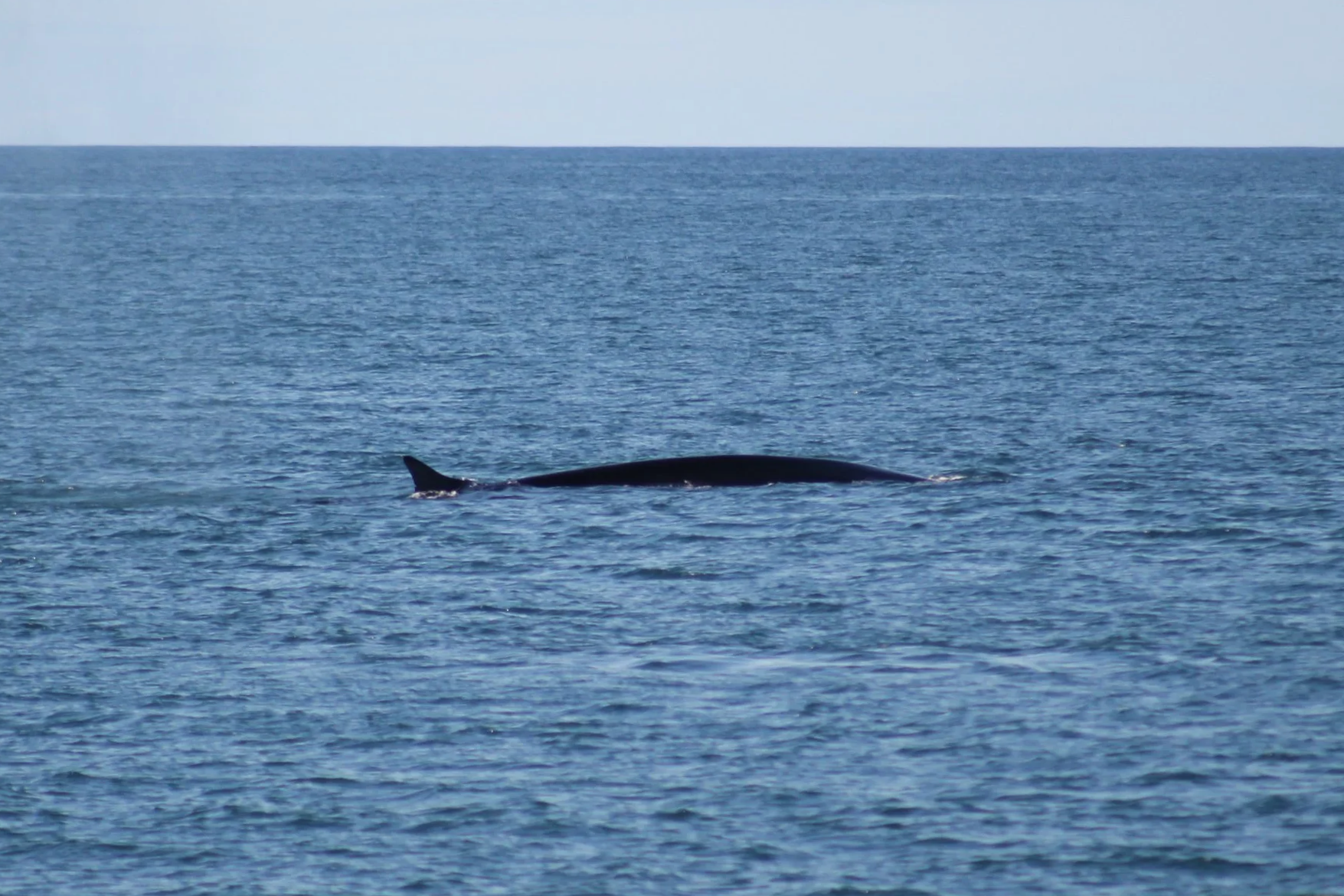
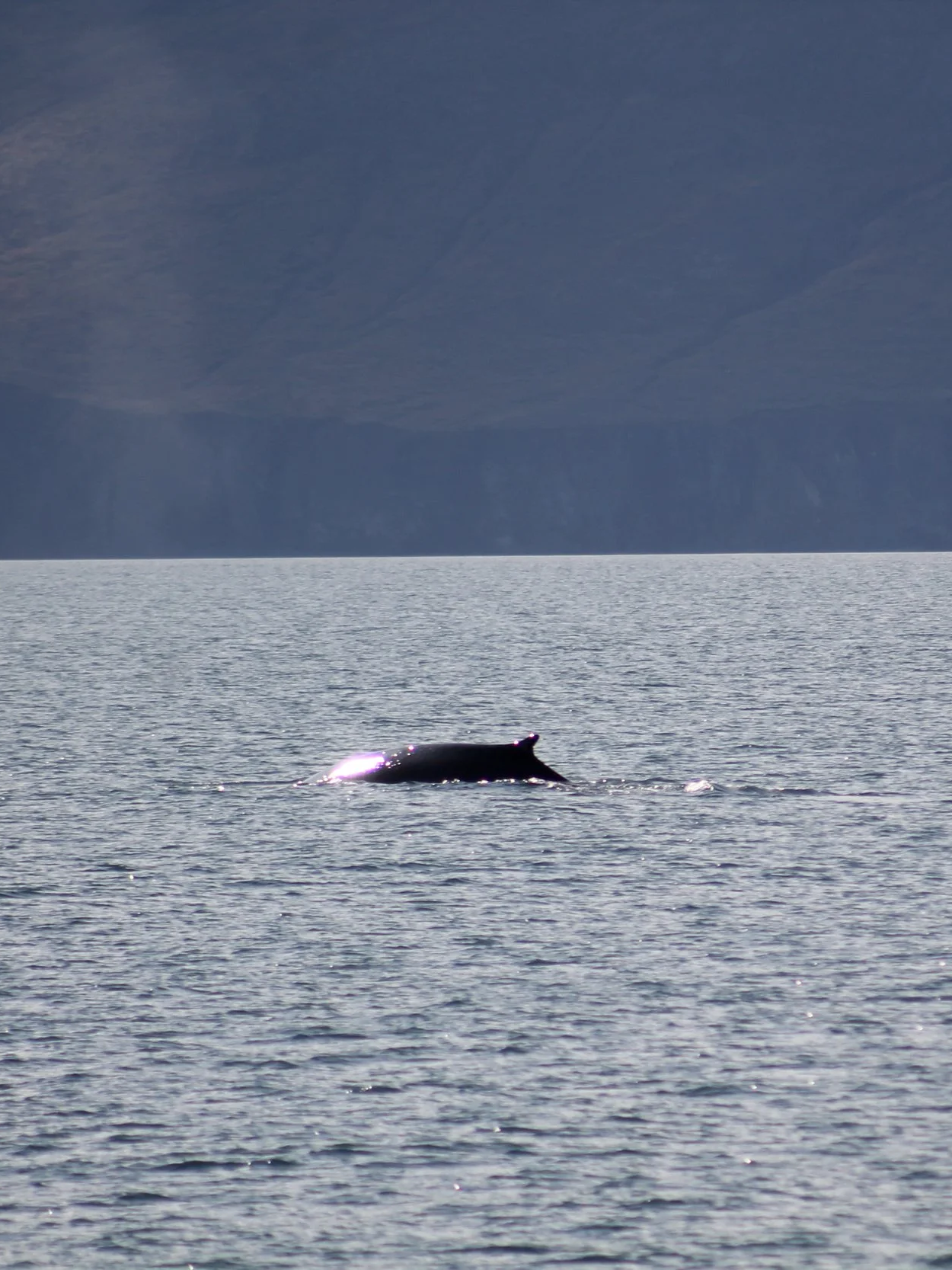
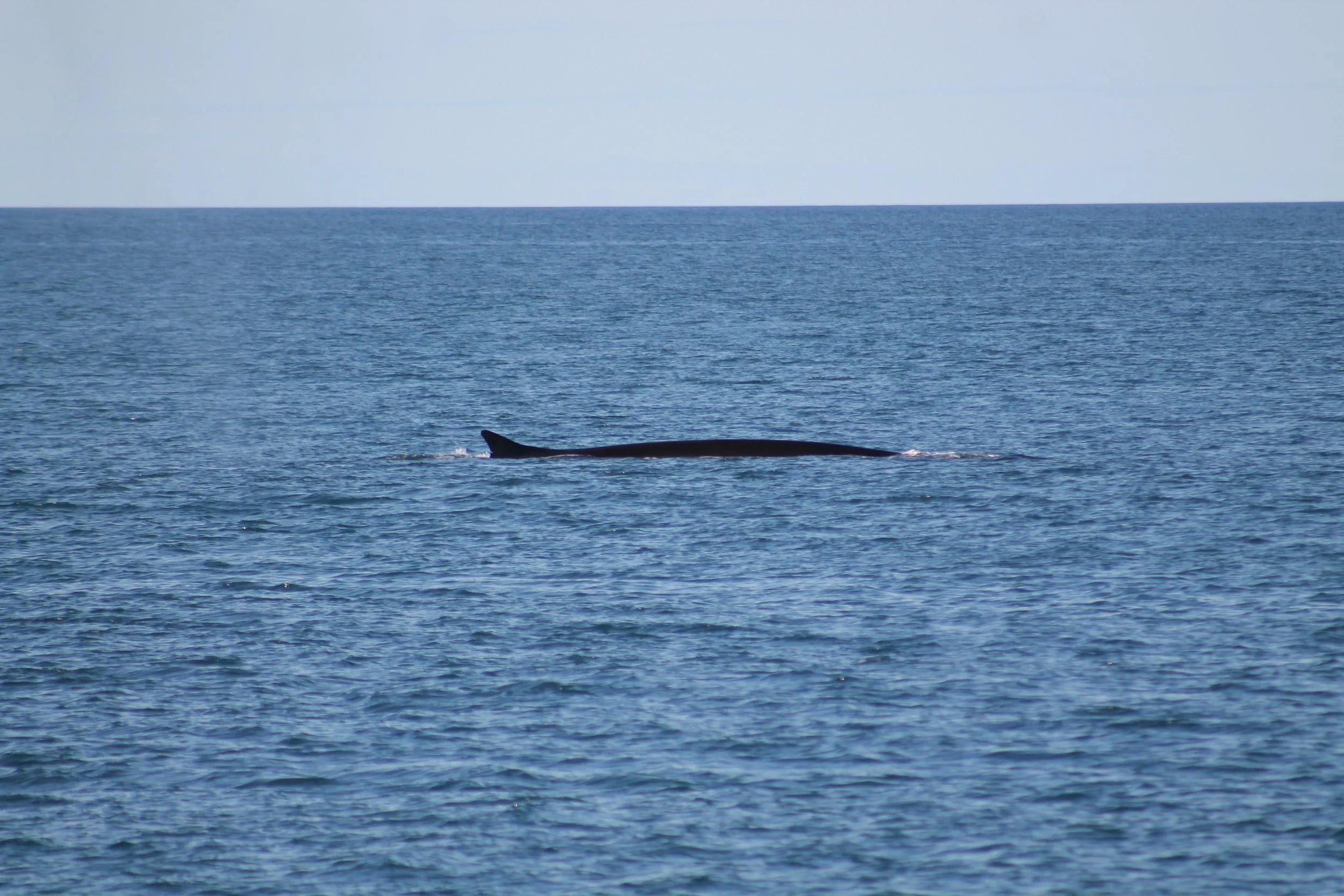
Fin Whales in Iceland
If the blue whale is the largest, the fin whale is the fastest. Balaenoptera physalus, often called the “greyhound of the sea,” is the second largest whale on Earth and one of the most powerful swimmers in the ocean. Long, sleek, and built for speed, it moves through the water with a sense of direction that feels different from other whales.
Fin whales are seasonal visitors to Iceland and may occasionally be encountered in Skjálfandi Bay, particularly when feeding conditions are strong. They are widely distributed and often associated with deeper waters, though they can approach coastal areas where prey is concentrated.
Their diet is varied and opportunistic. In the North Atlantic, fin whales feed primarily on krill but also target small schooling fish such as herring, capelin, and mackerel. Like other rorquals, they are lunge feeders, opening their mouths wide up to nearly 90 degrees to engulf prey-laden water.
One of their most distinctive features is asymmetry. The right lower jaw is white, while the left is dark—a unique pattern among whales. Though not always visible from a boat, it is a defining characteristic of the species.
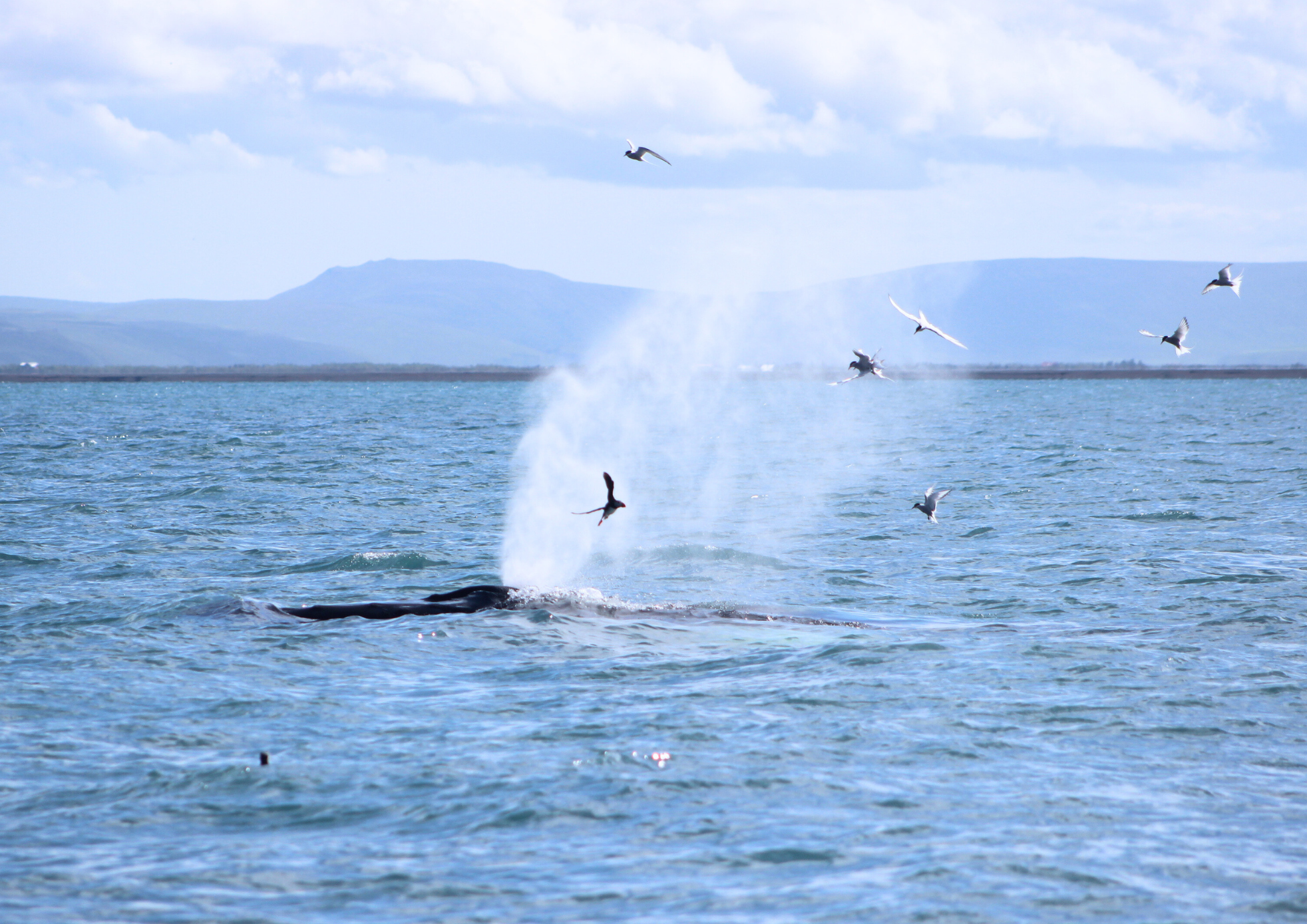
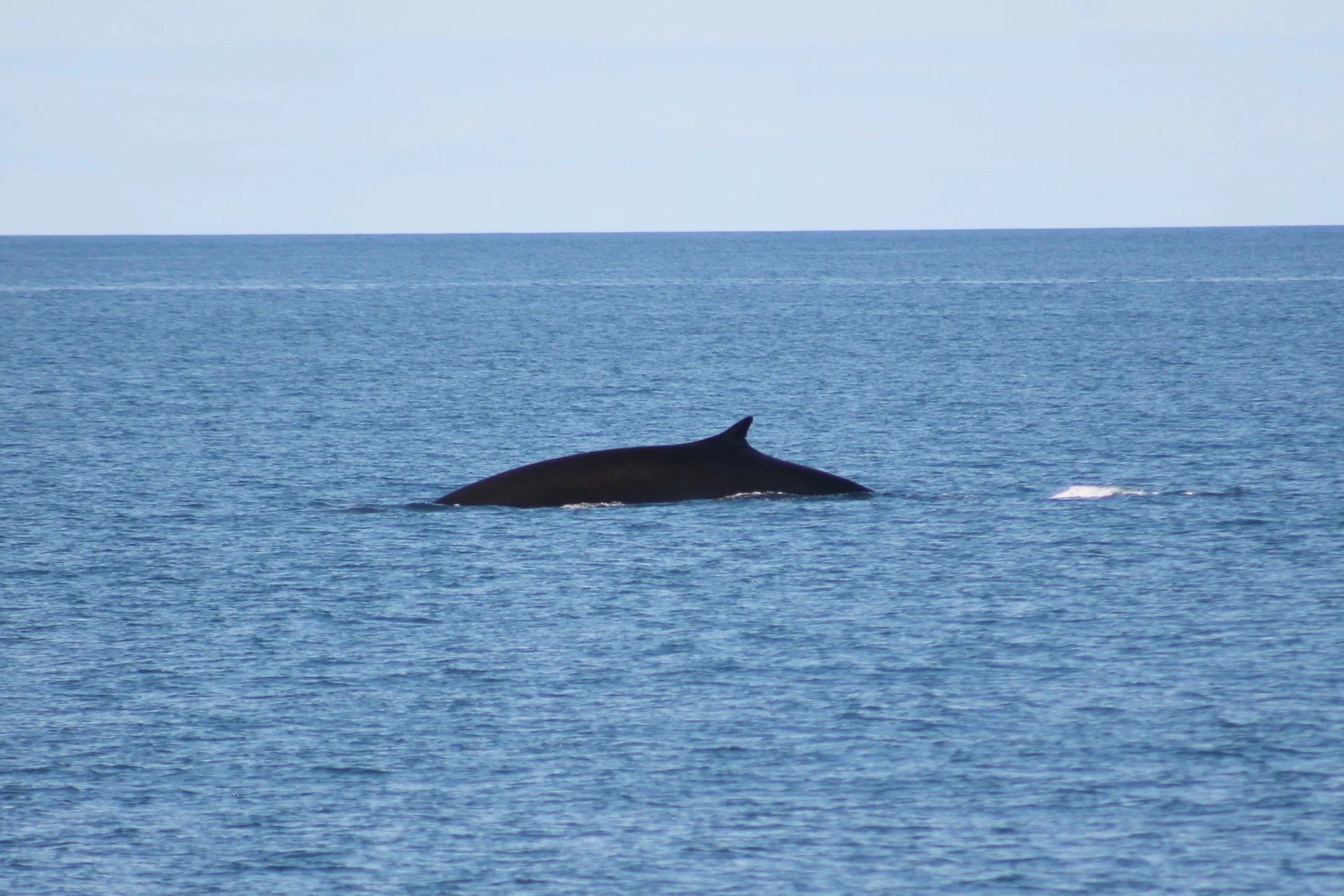
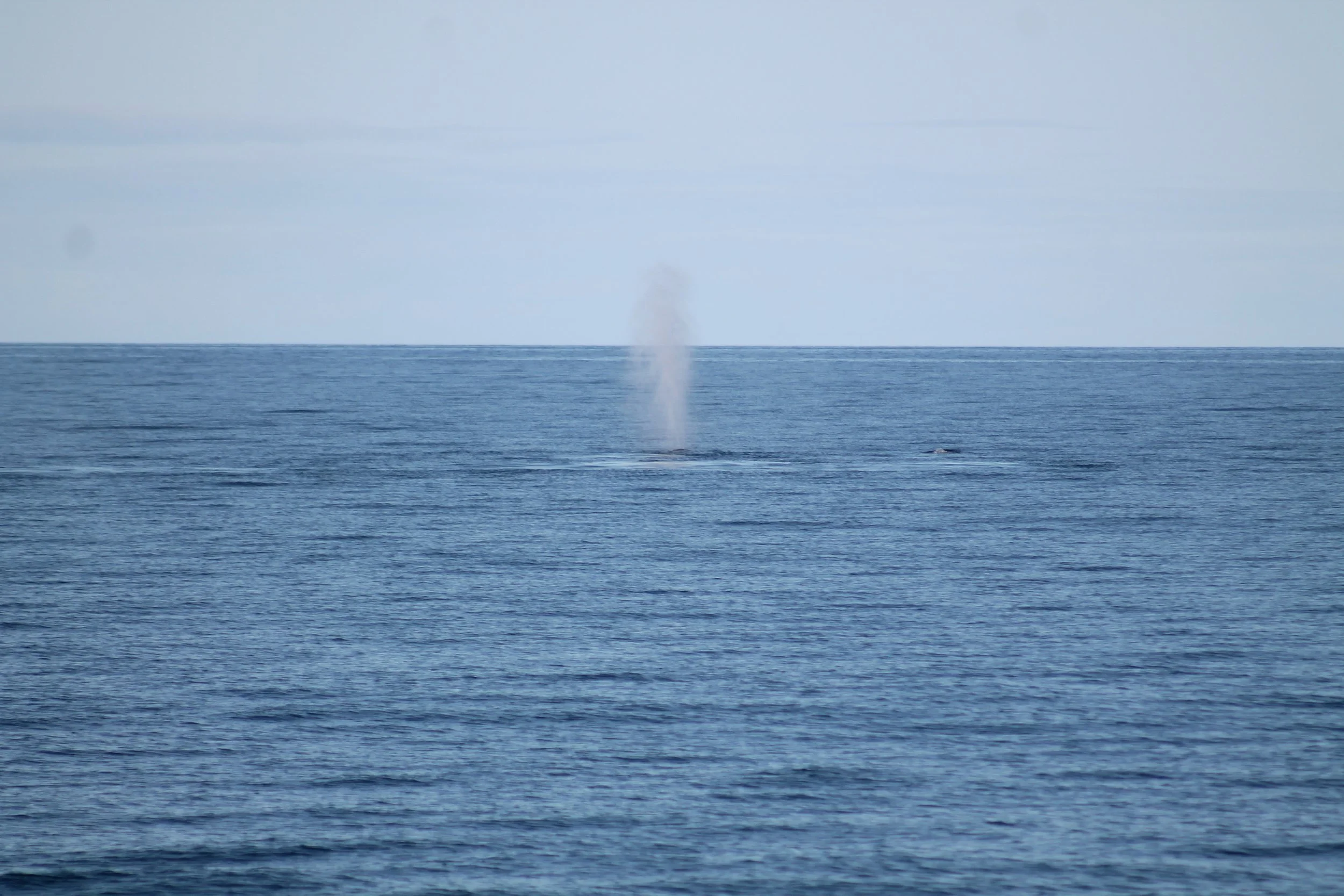
At the surface, their behaviour is smooth and efficient. The blow appears first: tall and columnar, followed by a long, low back. The dorsal fin emerges well after the blow, often when the head is already submerged. Unlike humpbacks, they rarely show their flukes.
Fin whales are usually seen alone or in small groups, though larger feeding aggregations can occur in highly productive areas. They are fast, direct, and often continue travelling even while feeding.
Seeing a fin whale in Skjálfandi Bay feels different. It’s not about spectacle, but about witnessing pure speed and efficiency in one of the ocean’s largest predators.