
Whales of Húsavík
Humpback Whale
Megaptera novaeangliae (Borowski, 1781)
-
Worldwide distribution
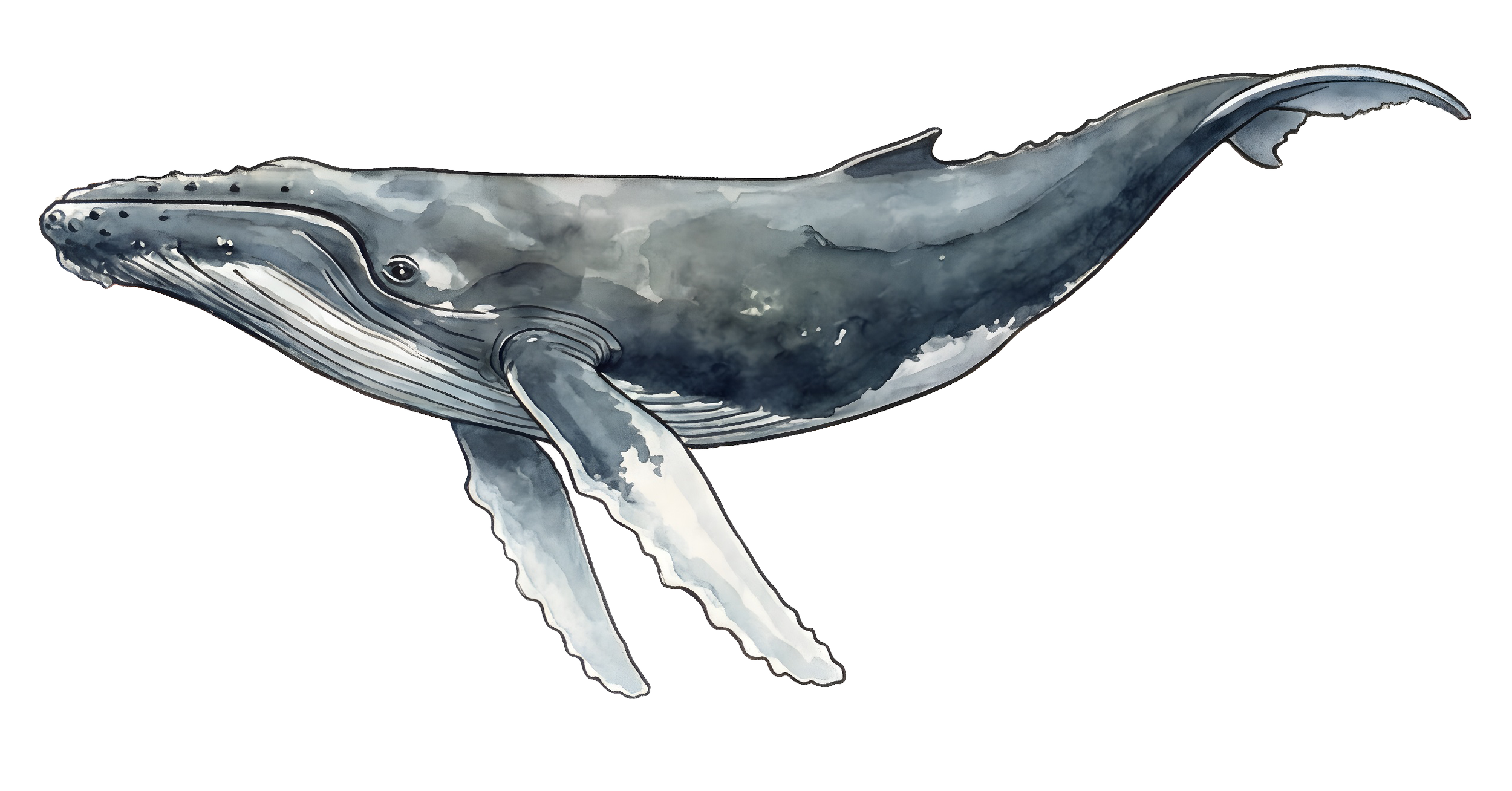
Large size
Predominantly dark grey to black upper side
Variable amount of white on underside
Stocky body
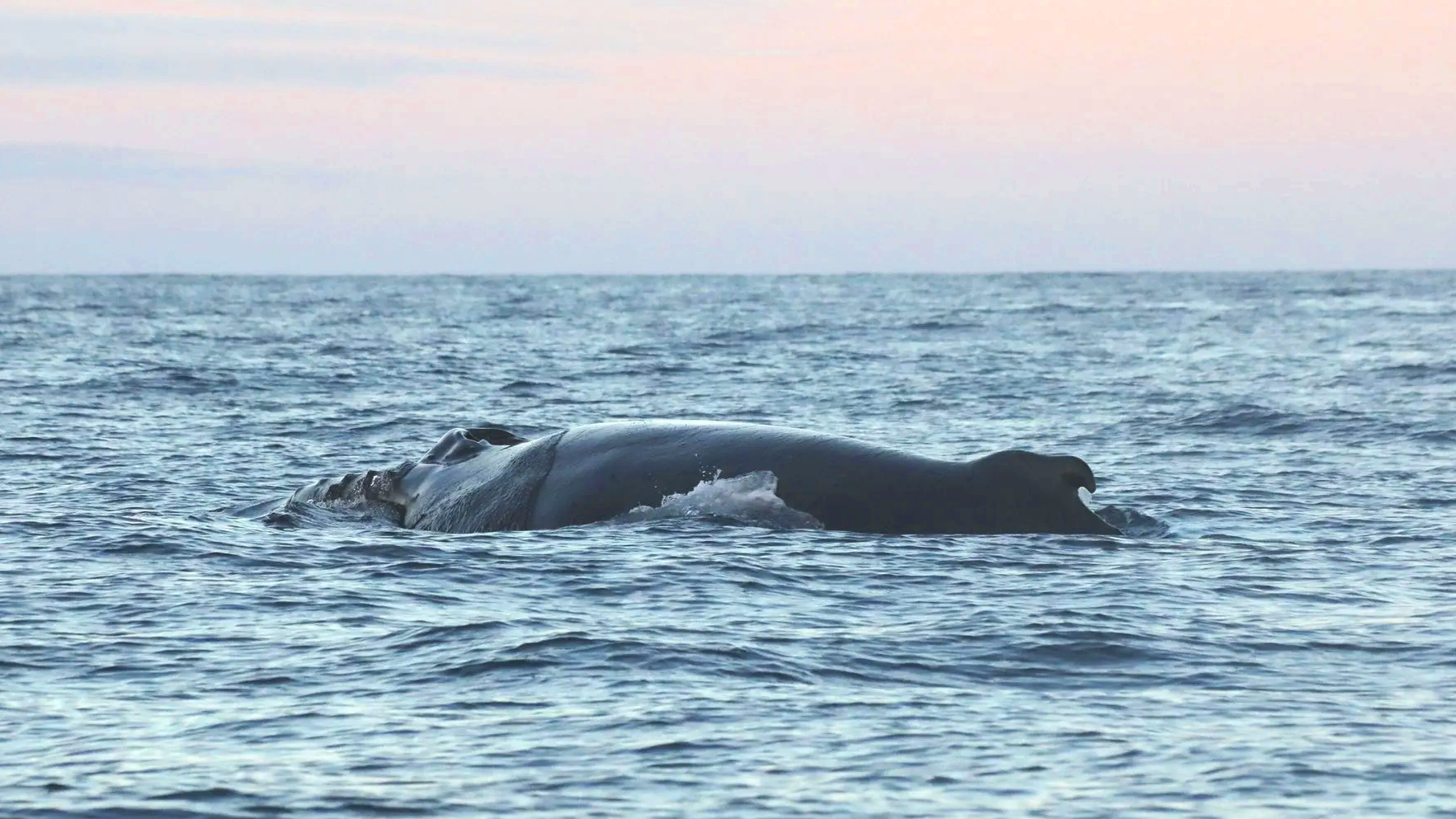
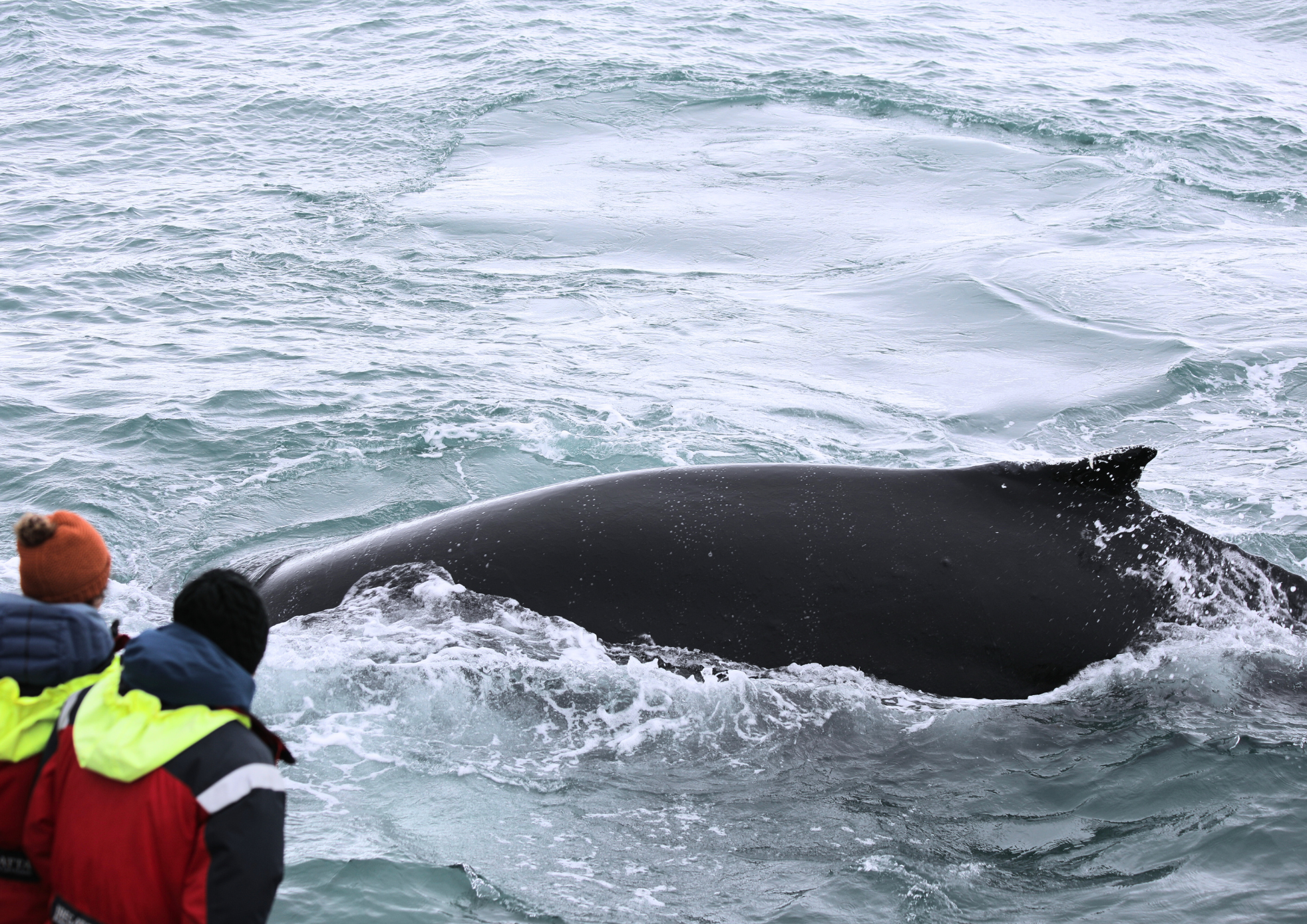
Small dorsal fin sits on (variable) hump on back
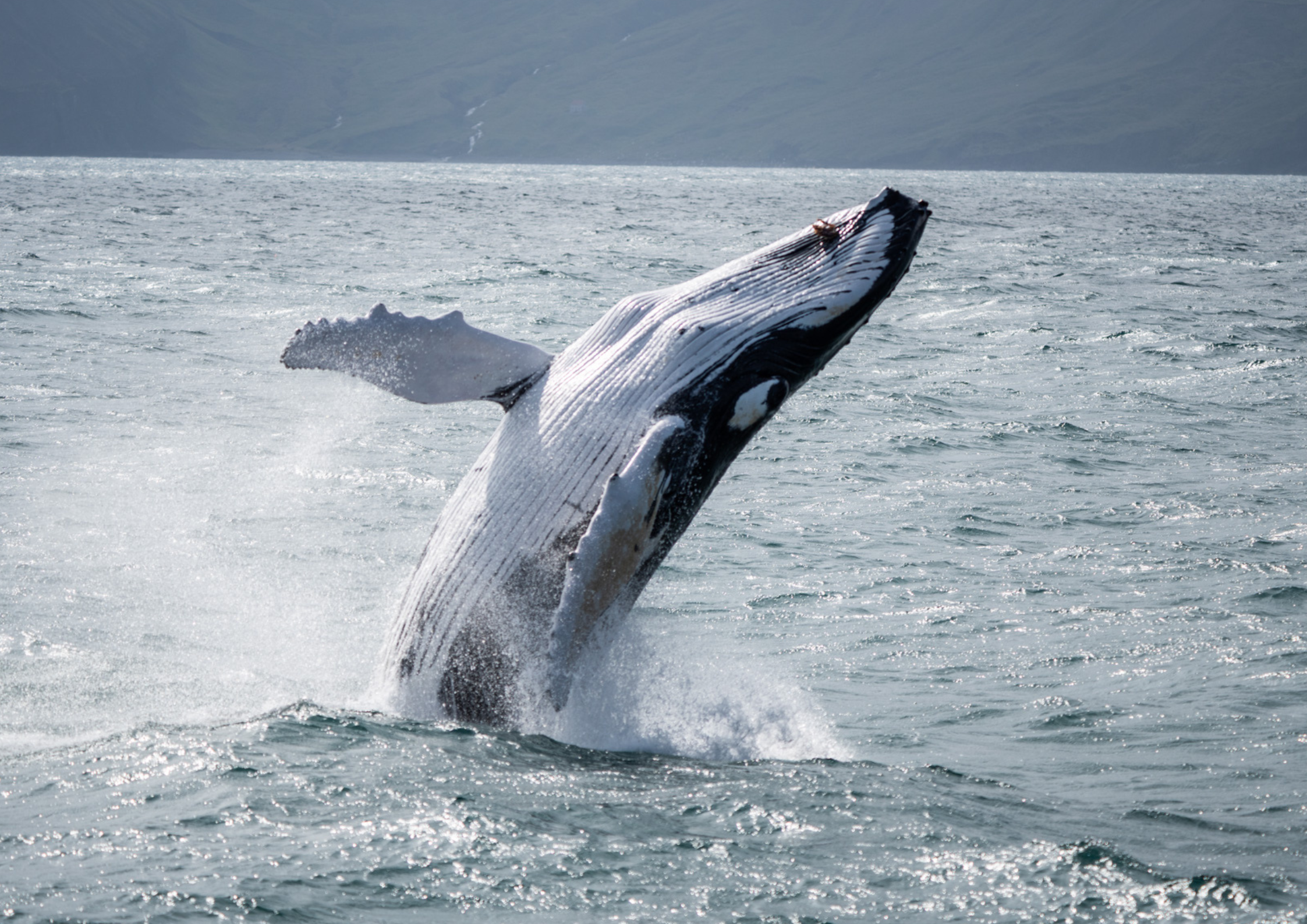
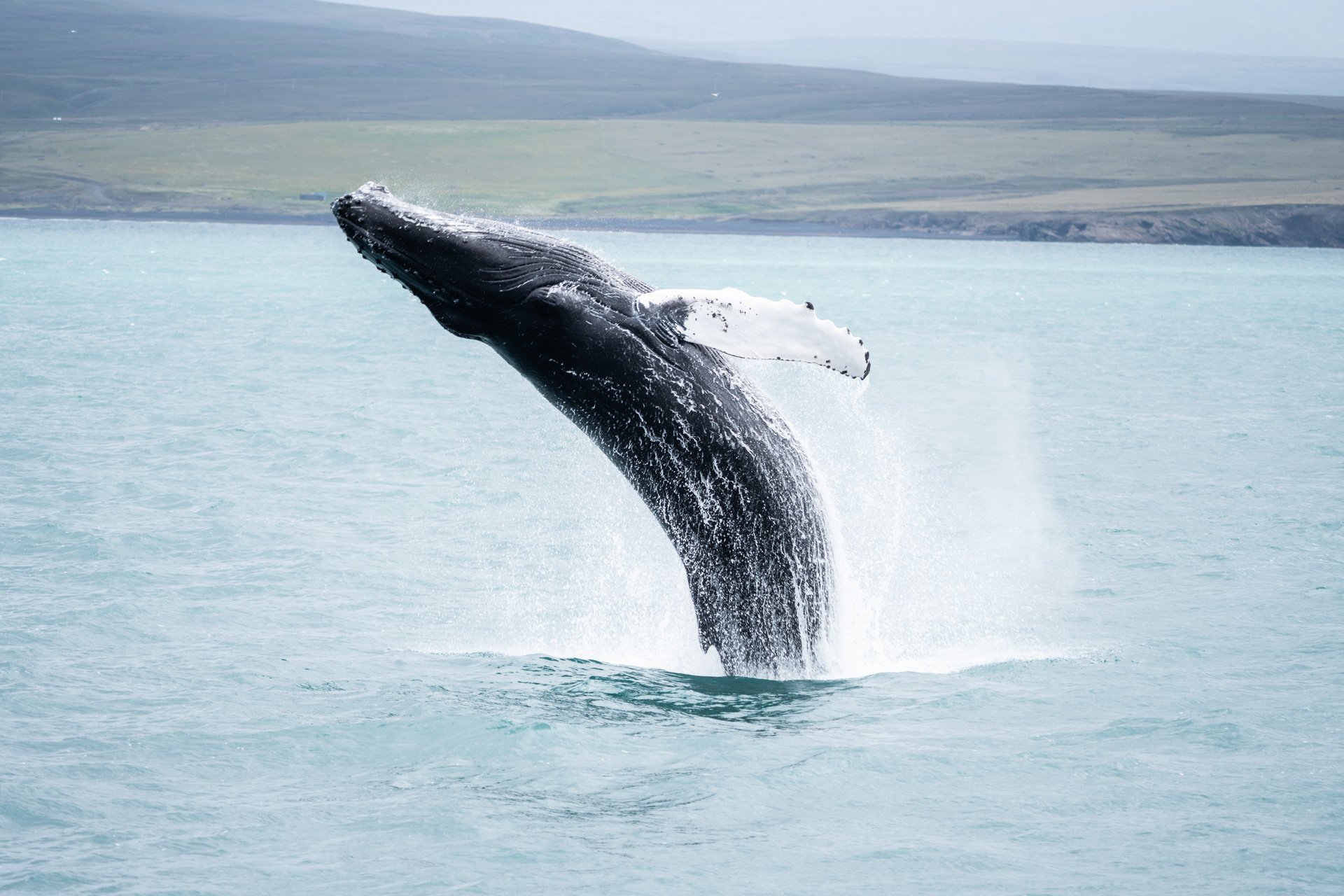
Exceptionally long white (or black-and-white) flippers
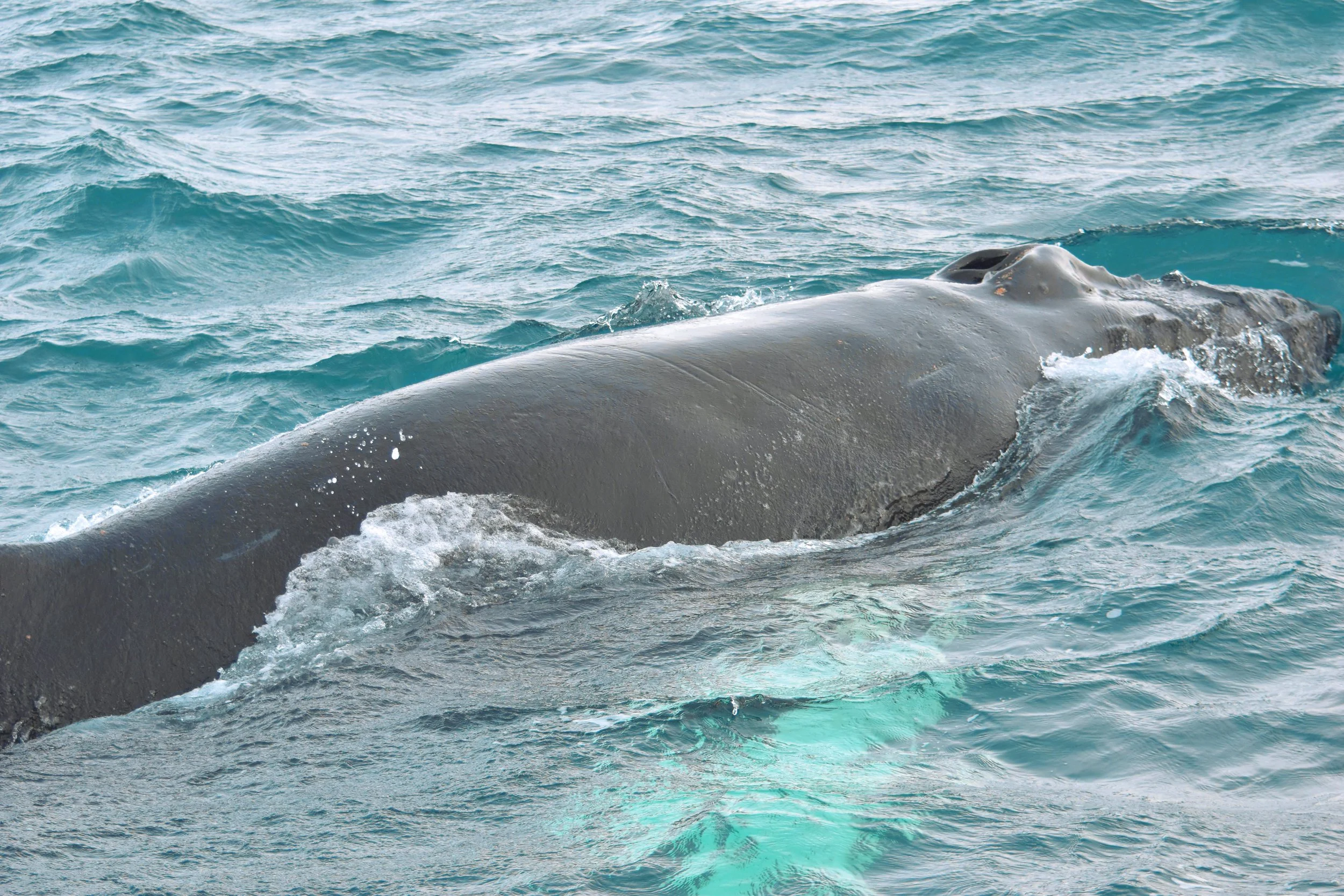
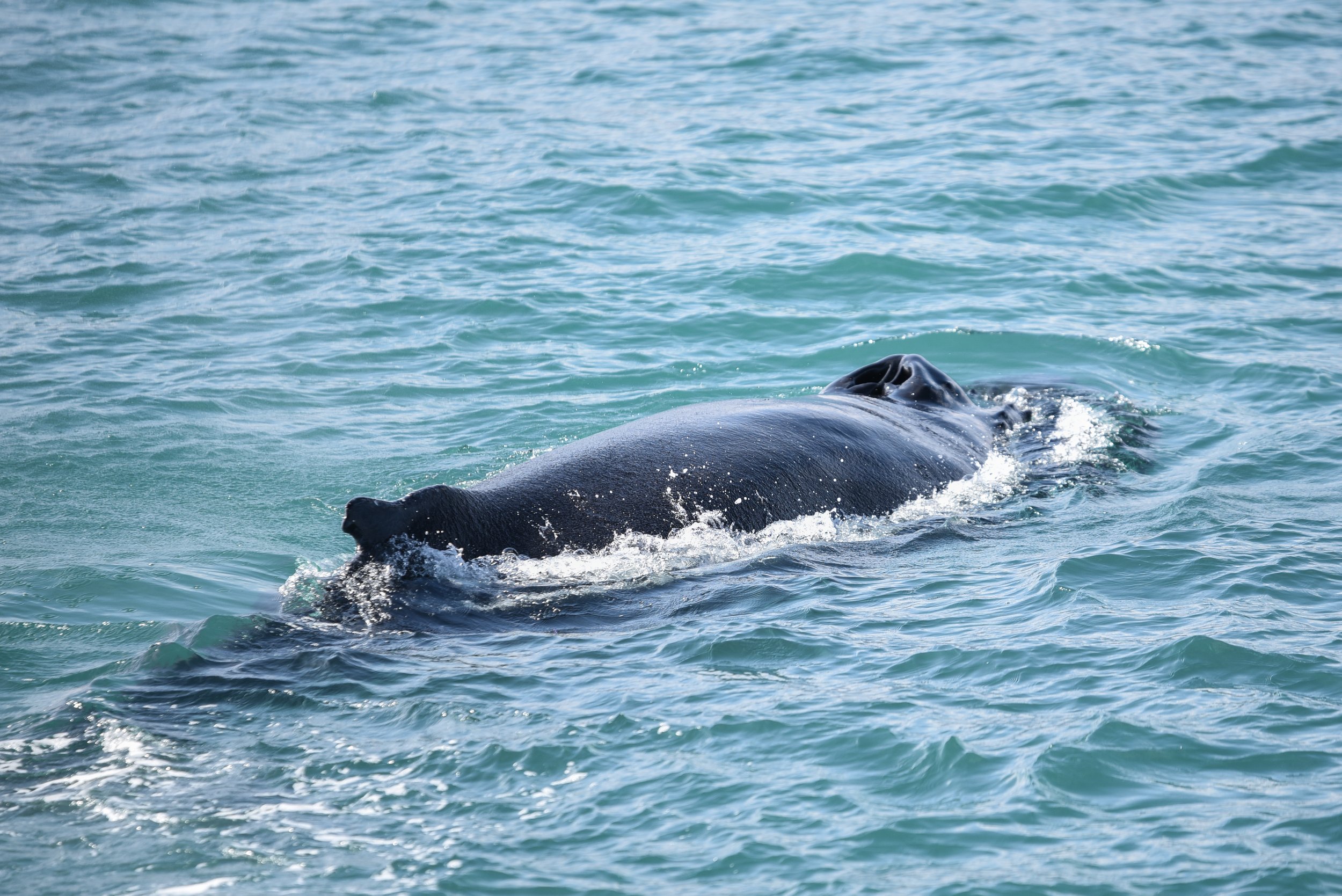
Distinctive knobs on head
Strongly arches the back when diving
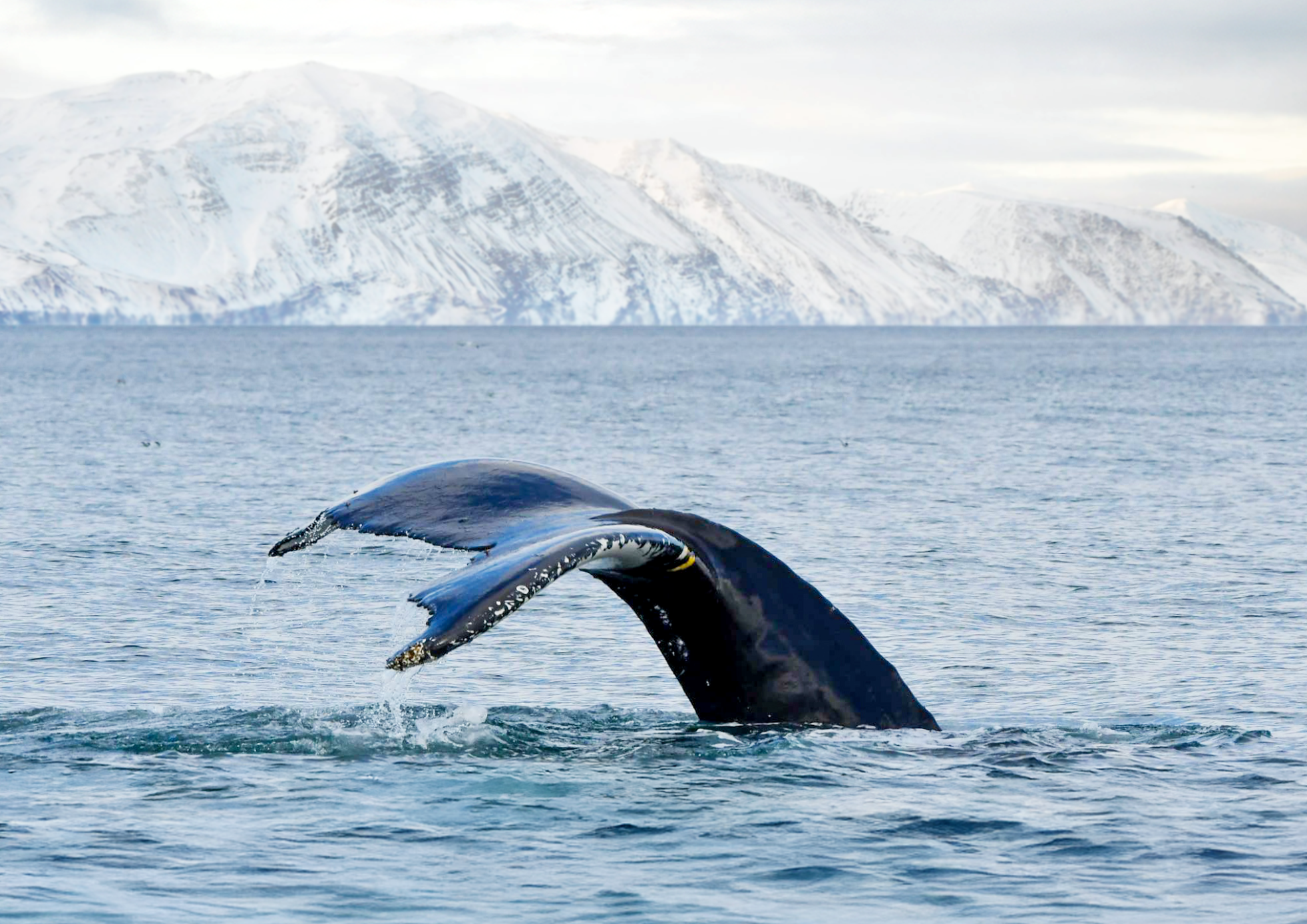
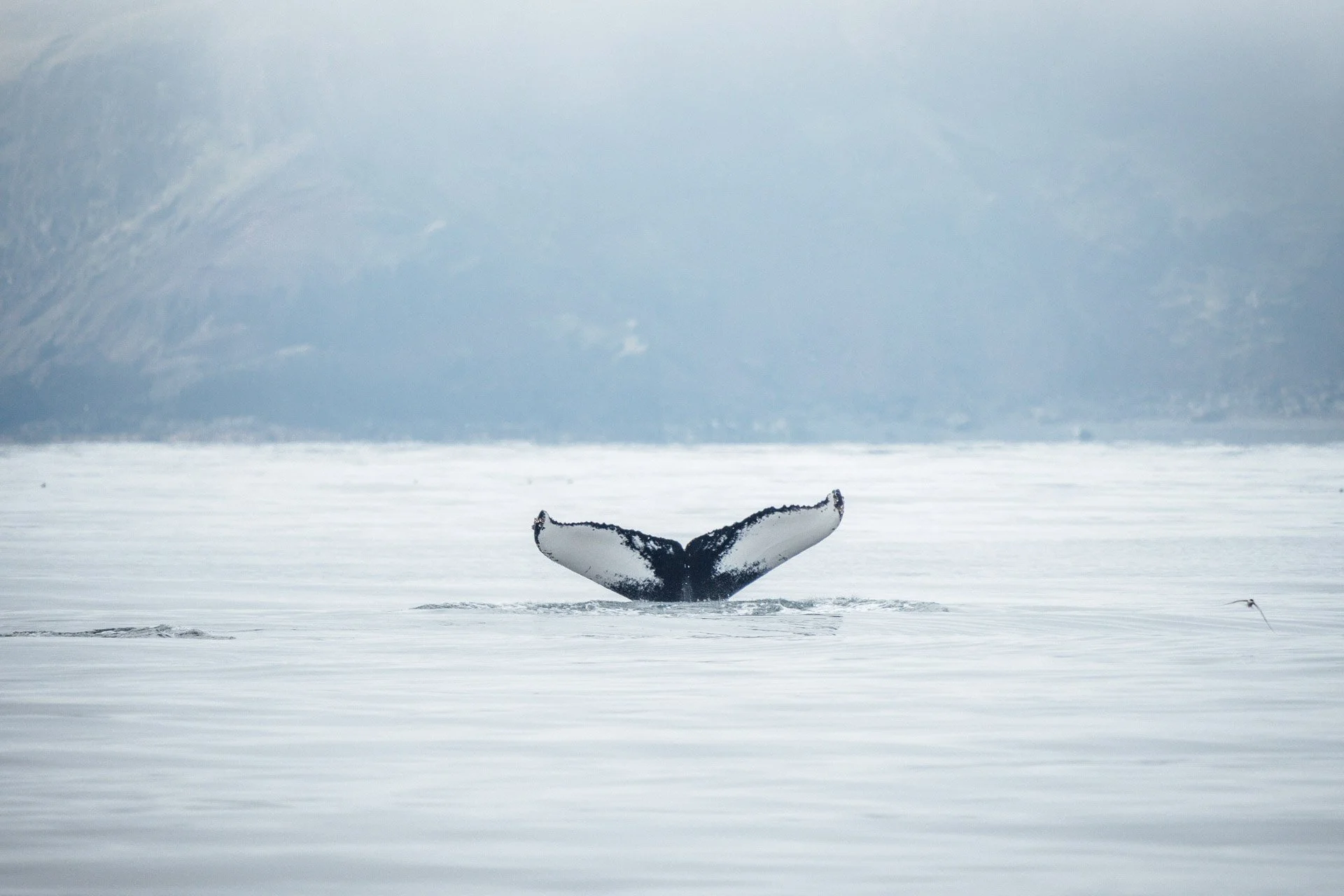
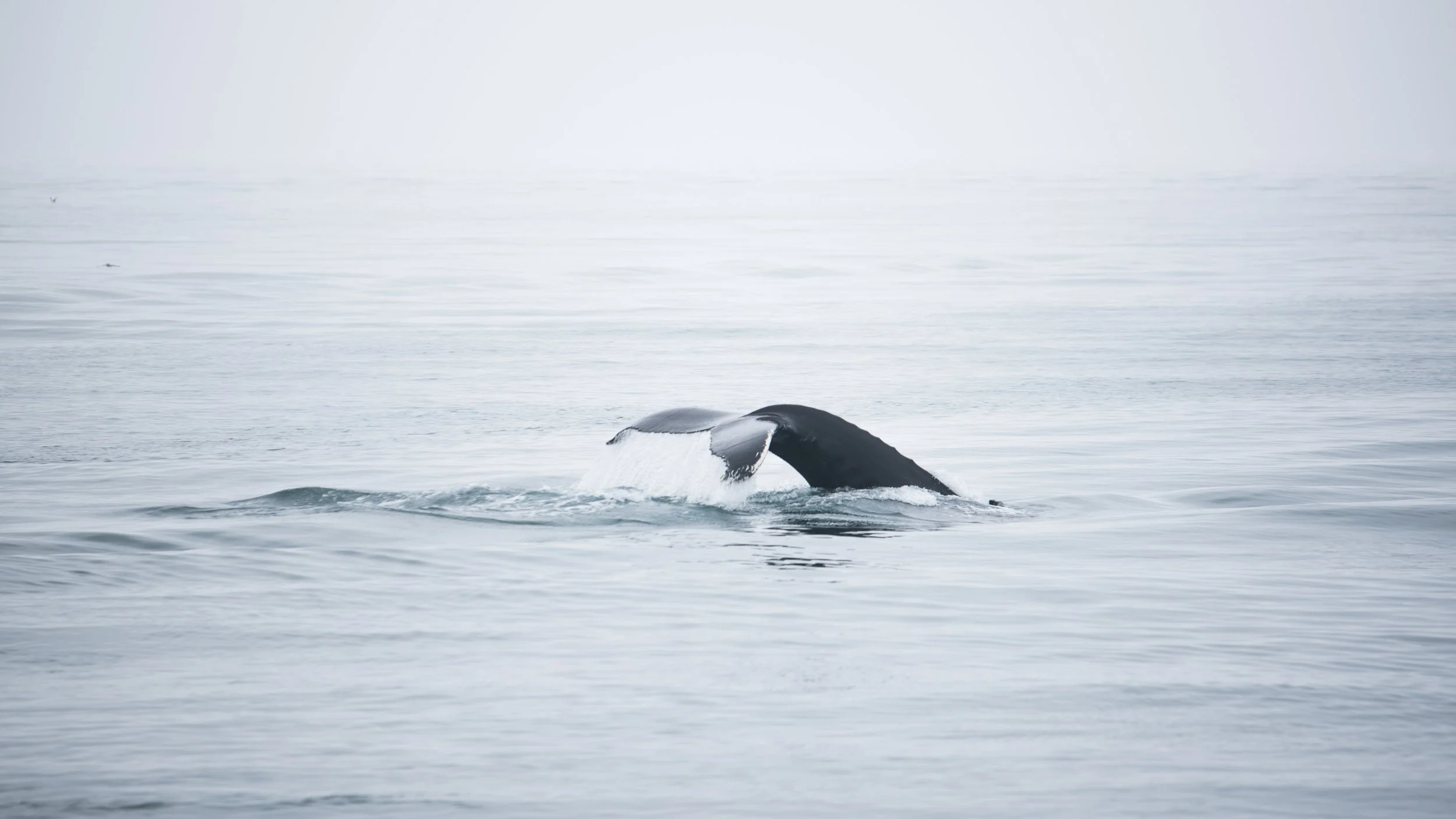
Usually flukes on sounding dive
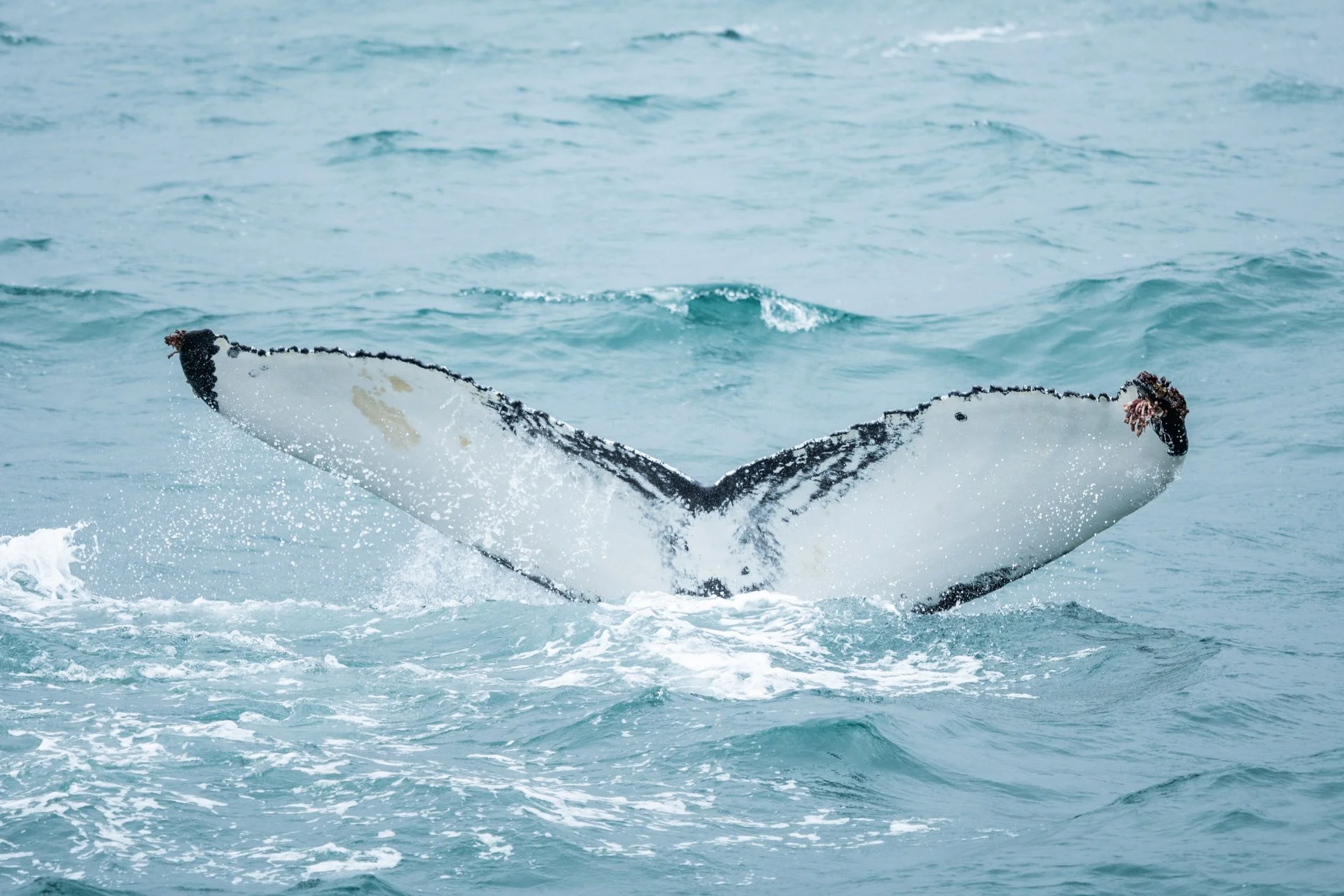
Variable (and individually distinctive) black-and-white pigmentation on underside of flukes
In Iceland, the subspecies of humpback whale commonly sighted is generally referred to as North Atlantic Humpback Whale (Megaptera novaeangliae novaeangliae)
-
On average:
Male: 11 to 15 m
Female: 12 to 16 m
Approximate weight for both sexes: 25 to 35 tonnes
-
Feeding dives typically last 3-10 minutes, sometimes up to 15 minutes
Maximum average dive time is approximately 40 minutes
Longest recorded dive was 55 minutes
-
At least 50–75 years
-
IS: Hnúfubakur
DE: Buckelwal
FR: Baleine à bosse
IT: Megattera
ES: Ballena jorobada
PT: Baleia jubarte
PL: Humbak/Długopłetwiec oceaniczny

Humpback Whales in Iceland
If the blue whale changes your sense of scale, the humpback whale changes your sense of movement.
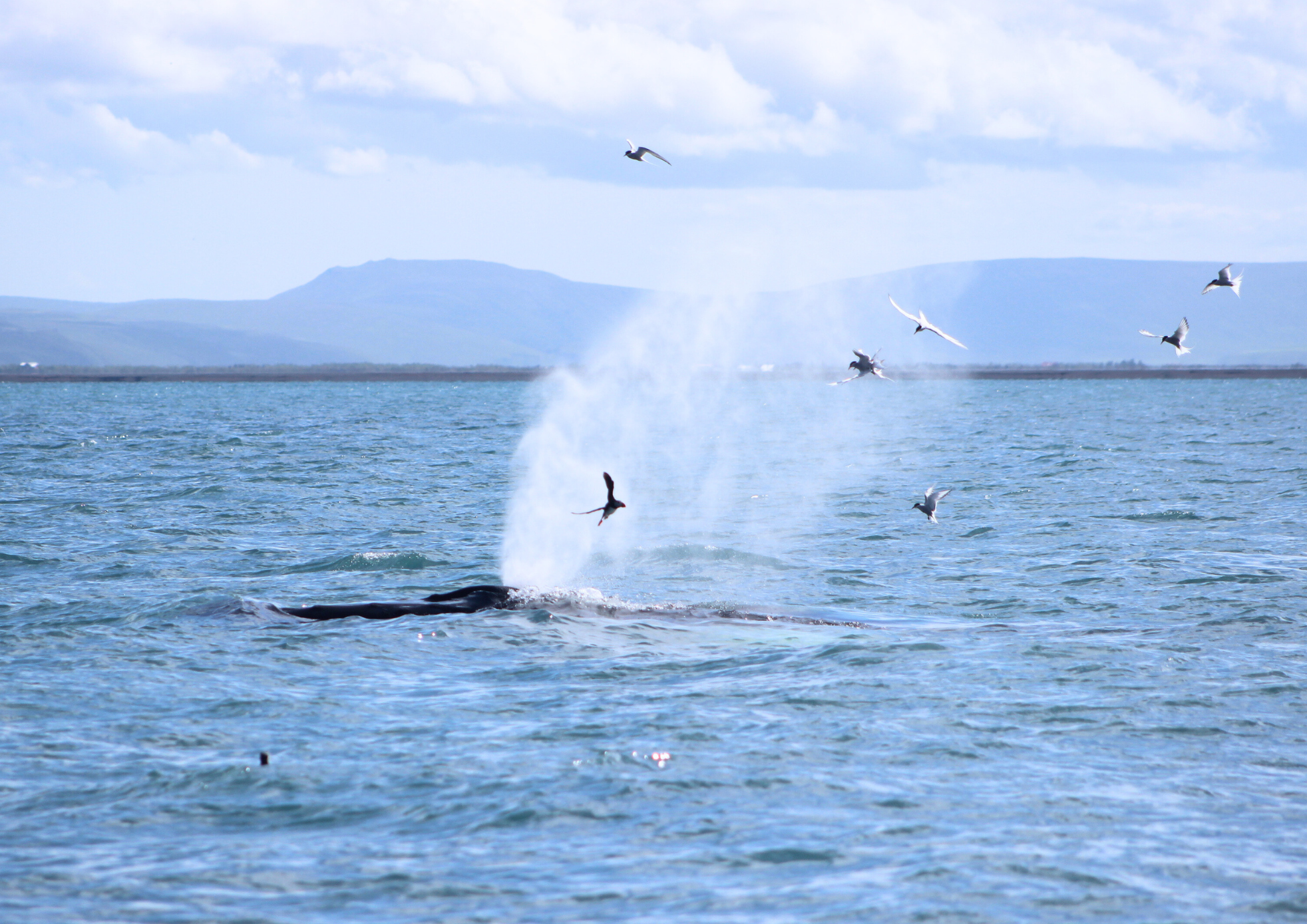
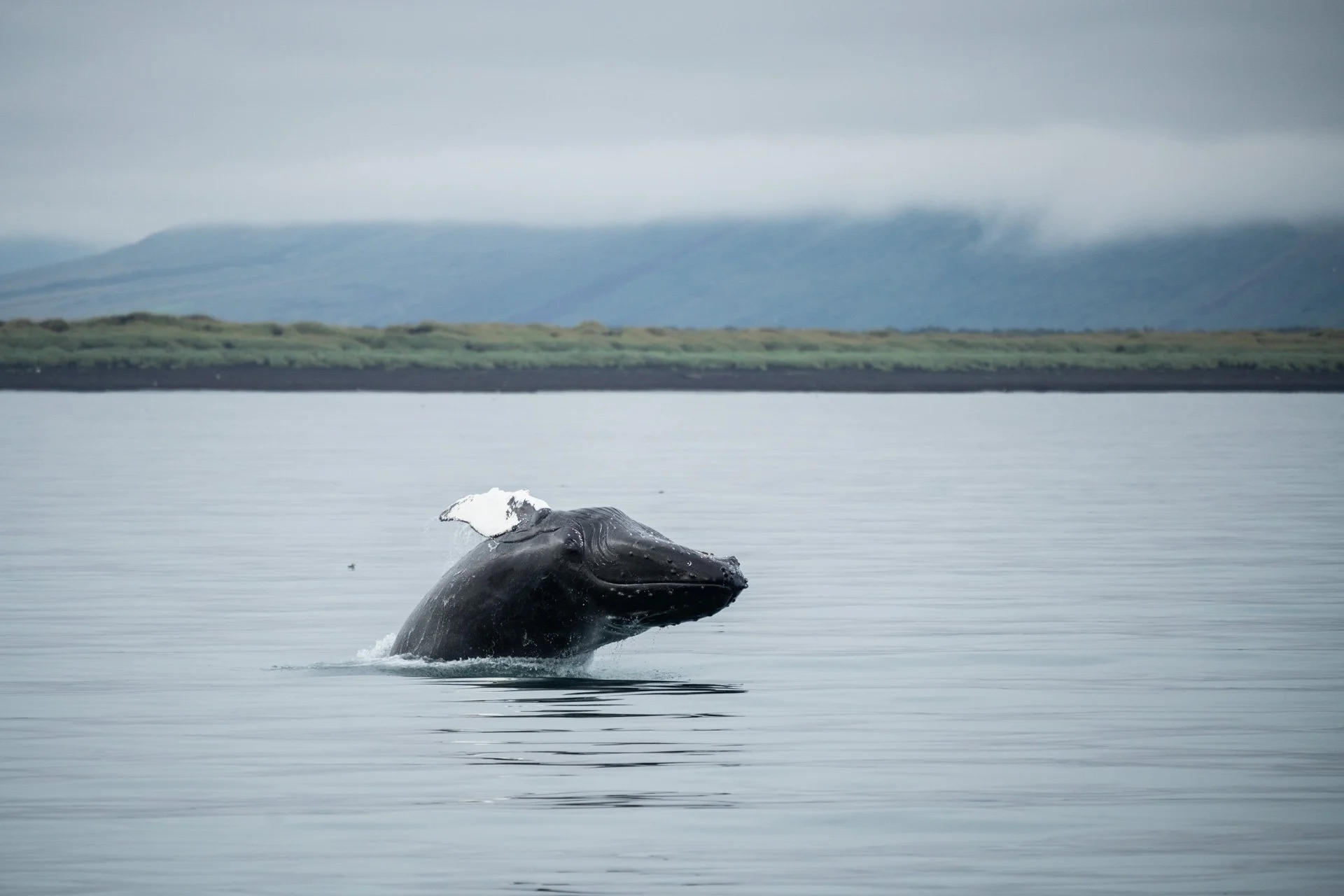
In Skjálfandi Bay, humpback whales (Megaptera novaeangliae) are often the stars of the show. Where other whales pass quietly, humpbacks announce themselves through breaches, tail slaps, and the slow, deliberate rise of their flukes before a dive. They are among the most frequently sighted species during whale watching in Iceland, and also one of the most individually recognisable.
Each humpback carries its own identity on its tail. The underside of the fluke shows unique patterns of black and white, scars and markings that allow researchers and guides to recognise returning individuals year after year. And they do return. Skjálfandi Bay is an important feeding ground, and many humpbacks show strong site fidelity, coming back each summer to the same waters.
Their migration is long. In winter, they are found in tropical breeding grounds. By summer, they have travelled thousands of kilometres north to Iceland, where cold, nutrient-rich waters support an abundance of food. Here, they feed primarily on small schooling fish and krill.
Feeding behaviour can vary. Sometimes it is subtle, marked by a slow roll at the surface or a quiet lunge beneath it. Other times, it is explosive. Although cooperative techniques like bubble-net feeding are better known elsewhere, humpbacks in Iceland are still highly efficient hunters, adapting their behaviour to the conditions.
At the surface, their rhythm becomes familiar. A series of blows, a gradual arching of the back and the lift of the fluke before a deeper dive. These dives can last several minutes, depending on feeding depth.
Humpbacks are also known for their songs—complex, structured vocalisations produced mainly by males. While these are most associated with breeding grounds, they are a reminder that these animals are part of a much larger, connected ocean world.
Seeing a humpback in Skjálfandi Bay is rarely just a sighting. It is a memorable encounter, one that feels dynamic, unpredictable and deeply alive.