
Whales of Húsavík
Common Minke Whale
Balaenoptera acutorostrata (Linnaeus, 1804)
-
Tropics to poles worldwide
Medium size
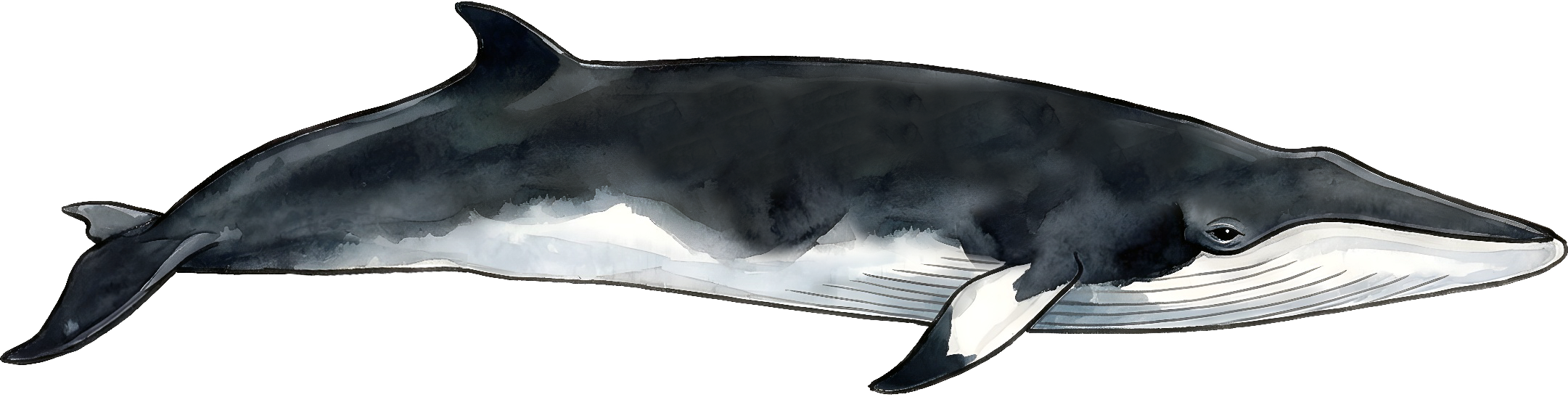
Dark grey, brownish grey or blackish upper side, white underside
Variable swathes of lighter grey on sides and back
Sharply pointed rostrum breaks surface first
Single longitudinal ridge on rostrum
Relatively tall and falcate dorsal fin, two-thirds of the way along back
Unique, bright white flipper bands
Indistinct or invisible blow
In Iceland, the subspecies of minke whale commonly sighted is generally referred to as North Atlantic Minke Whale (Balaenoptera acutorostrata acutorostrata)
-
On average:
Male: 7,5 to 8,5 m
Female: 8,5 to 9,5 m
Approximate weight for both sexes: 6 to 8 tonnes
-
Feeding dives are typically 3–10 minutes
Maximum dive time is 20 minutes
Doesn’t fluke when diving, arches the back and tailstock high before a deep dive
-
At least 50 years
The oldest recorded individual was 60 years old
-
IS: Hrefna
DE: Zwergwal
FR: Petit rorqual
IT: Balenottera minore
ES: Rorcual aliblanco
PT: Baleia anã
PL: Płetwal karłowaty
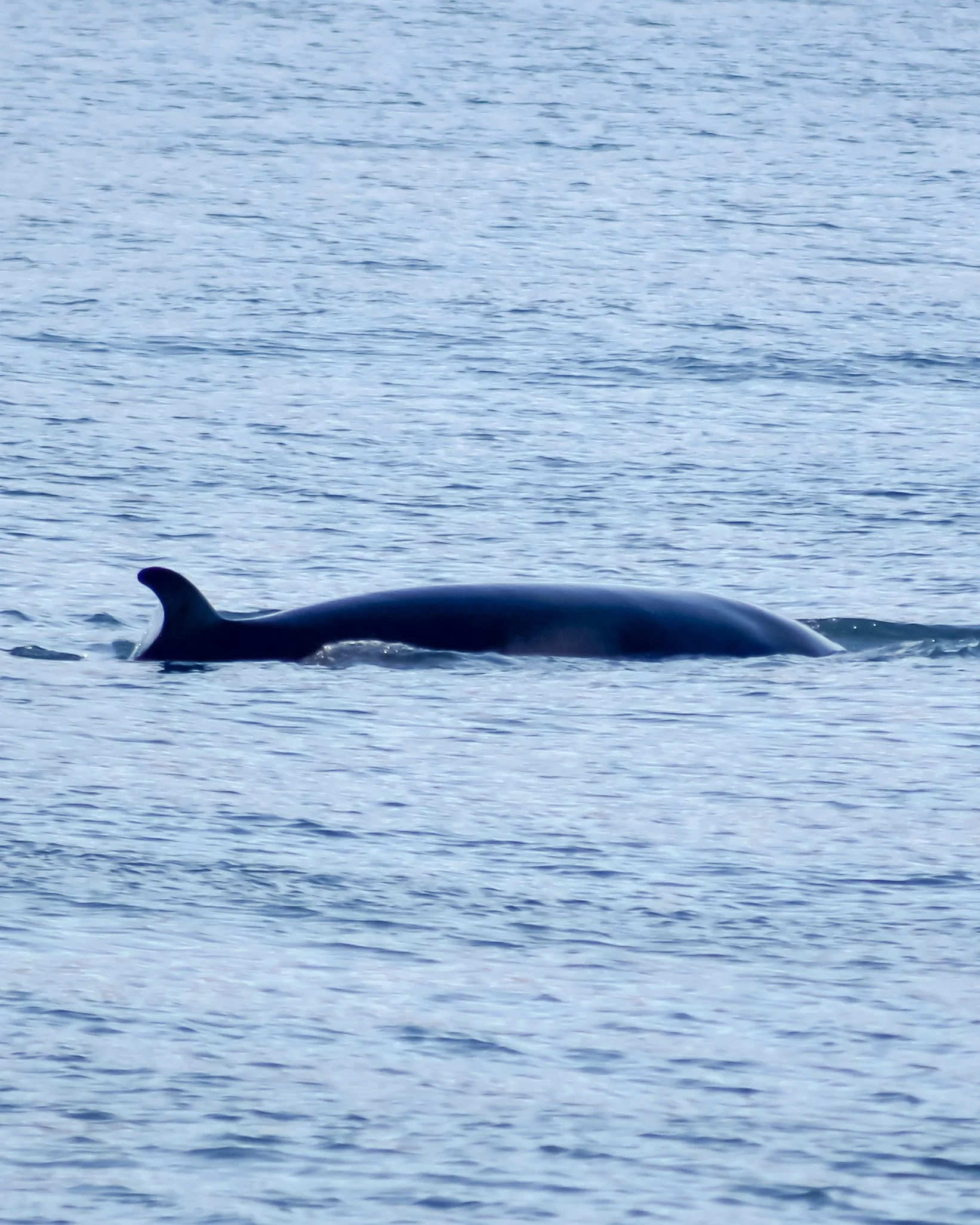
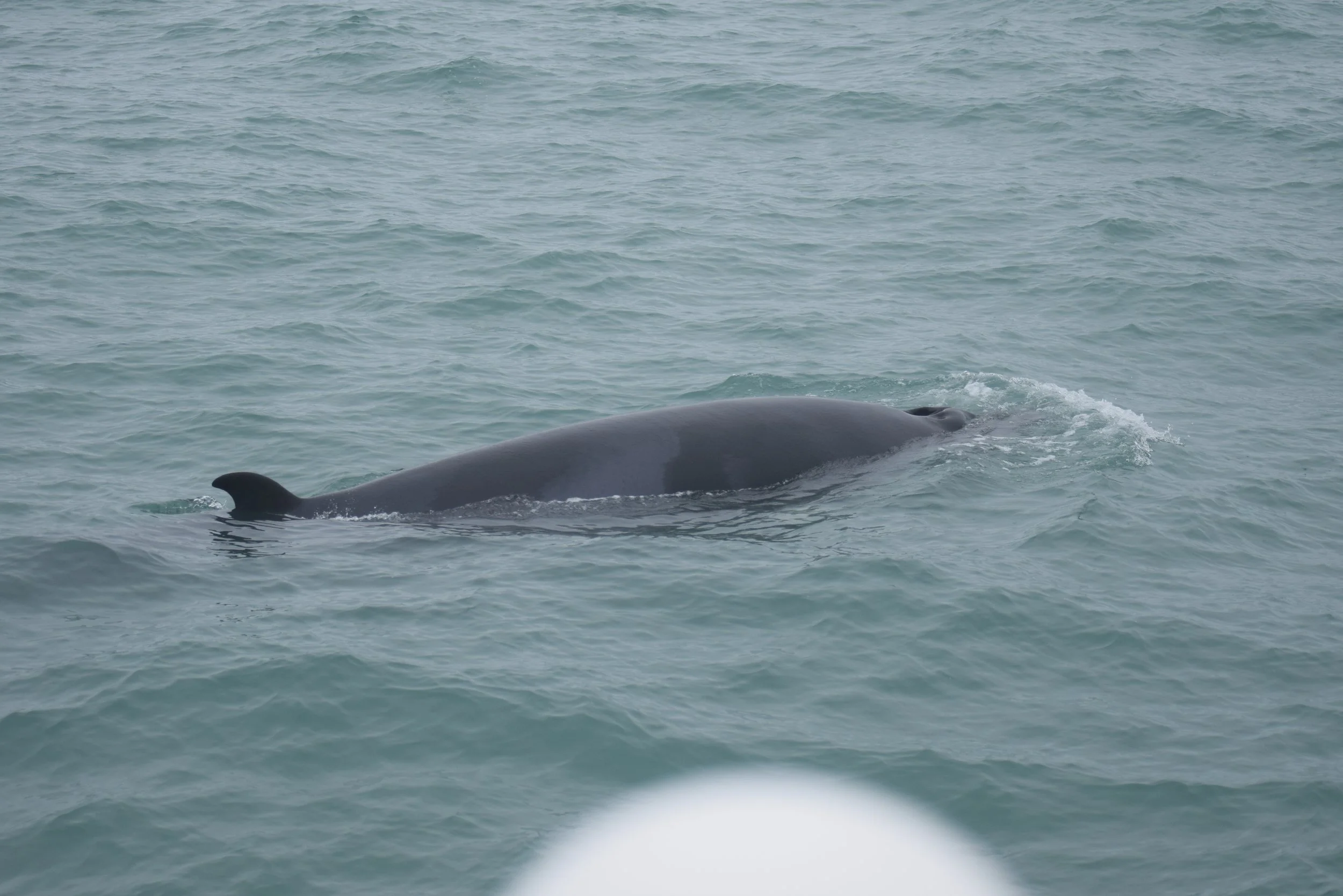
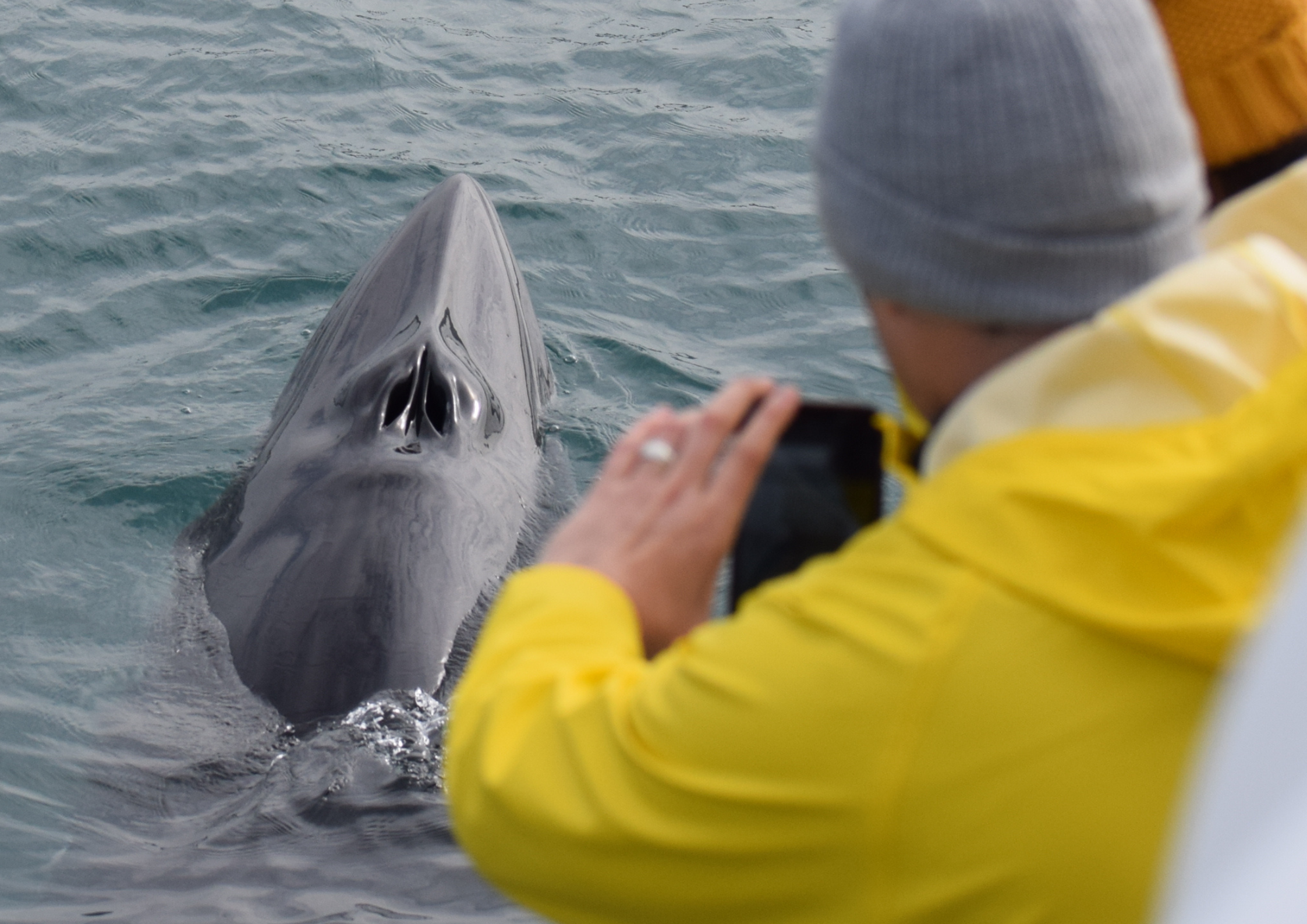
Common Minke Whales in Iceland
The minke whale is often times the first species you see in Skjálfandi Bay, and sometimes the hardest one to follow. Known as the “sneaky minke,” Balaenoptera acutorostrata is the smallest of the rorquals but one of the most widespread whales in Iceland. Unlike the slower, more predictable surfacing of larger whales, minkes move quickly, appear briefly, and disappear just as fast. Spotting one requires attention, patience, and a bit of instinct.
In Iceland, minke whales are strongly associated with coastal feeding grounds. Skjálfandi Bay provides ideal conditions, particularly in shallower areas where prey such as sand eel, herring, and other small schooling fish are abundant. Studies in the bay have shown a strong link between minke presence and sand eel distribution, highlighting how closely these whales track their food.
Their feeding behaviour is surprisingly complex. While they are capable of classic lunge feeding, they also use a wide variety of techniques like circles, sudden turns and even underwater disturbances to trap prey. Feeding often occurs near the surface, making brief sightings possible.
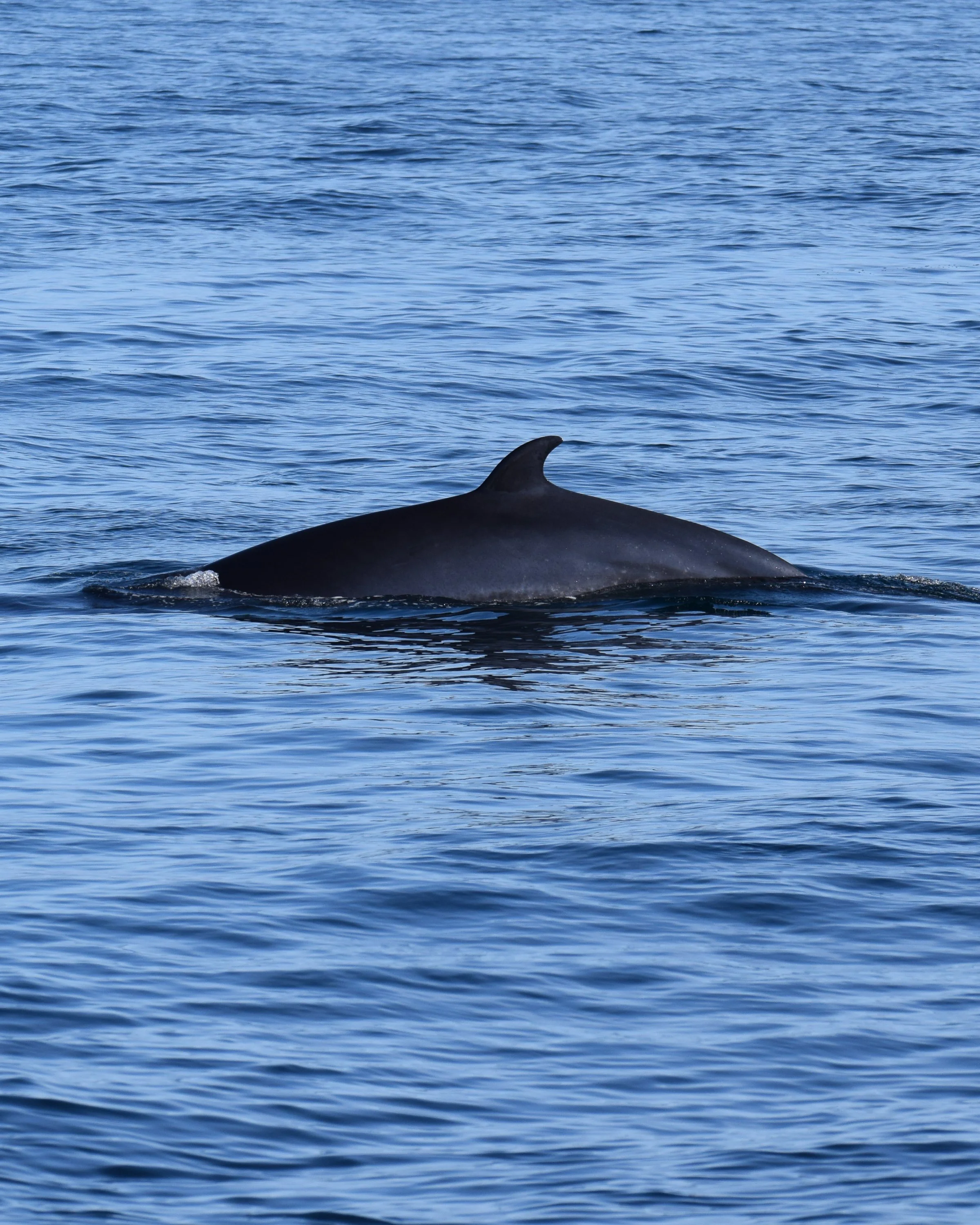
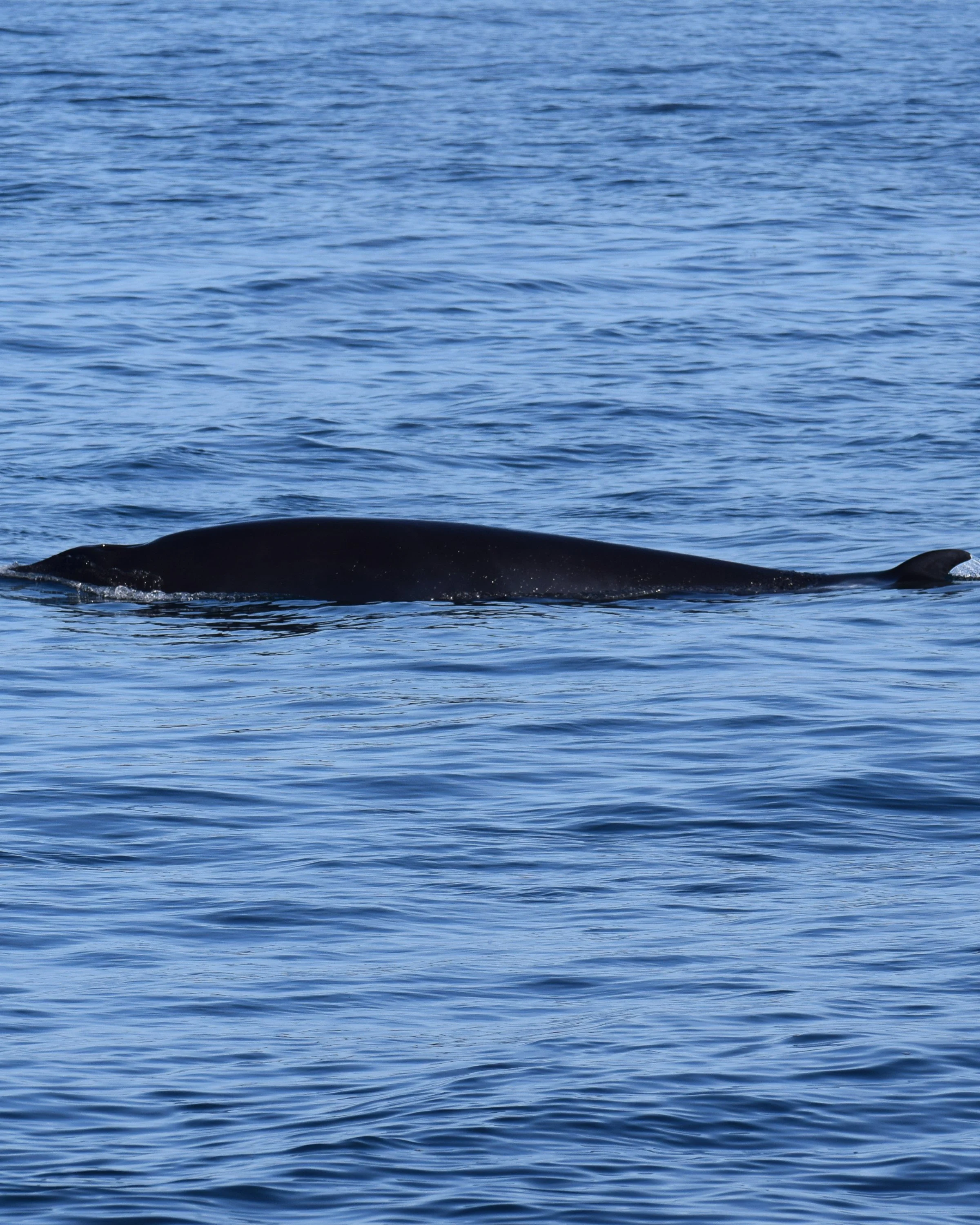
At the surface, their behaviour is subtle. The pointed snout breaks the water first, followed quickly by the back and a small, curved dorsal fin. Their blow is often faint or invisible, especially in calm conditions. They rarely show their flukes, and their surfacing sequences are short and erratic.
They are usually solitary, although multiple individuals may be present in productive areas. Their movements are unpredictable, and they can change direction quickly, making them challenging to track from a boat.
Despite their elusive nature, minke whales are an essential part of the Skjálfandi ecosystem. They are efficient predators, closely tied to local prey dynamics, and a constant presence throughout the feeding season.
Seeing a minke whale is not always dramatic, but it is often the most authentic kind of whale watching: quiet, quick, and real.