
Whales of Húsavík
Northern Bottlenose Whale
Hyperoodon ampullatus (Forster, 1770)
-
Cold, deep waters of the North Atlantic Ocean
Medium size
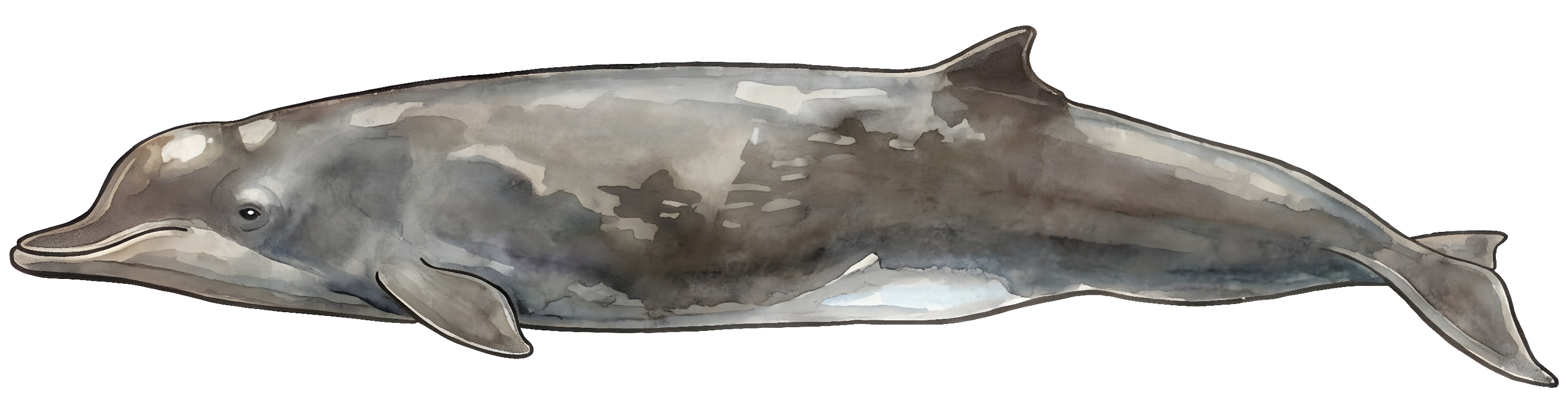
Grey, tan, or brownish coloration
Huge, squared-off, bulbous white or cream-coloured melon (especially evident in males)
Medium-length, thick, well-defined beak (hence “bottlenose”)
Prominent falcate dorsal fin two-thirds of the way along the back
Little or no linear scarring
Male's teeth not clearly visible
The Northern Bottlenose Whale is not only endemic to the North Atlantic, but also the largest beaked whale found in this area
-
On average:
Male: 7,5 to 9 m in length
Female: 7 to 8,5 m in length
Approximate weight: ca. 5 to 8 tonnes
Extreme sexual dimorphism, with adult males typically weighing 3 times as much as adult females, and ca. 40% longer
-
Often remain underwater for 30–40 minutes
Maximum recorded dive time of 98 minutes
-
At least 25-40 years
-
IS: Andarnefja
DE: Nördlicher entenwal
FR: Hyperoodon boréal
IT: Iperodonte boreale
ES: Ballena nariz de botella del Norte
PT: Baleia-de-bico-do-norte
PL: Butlonos północny
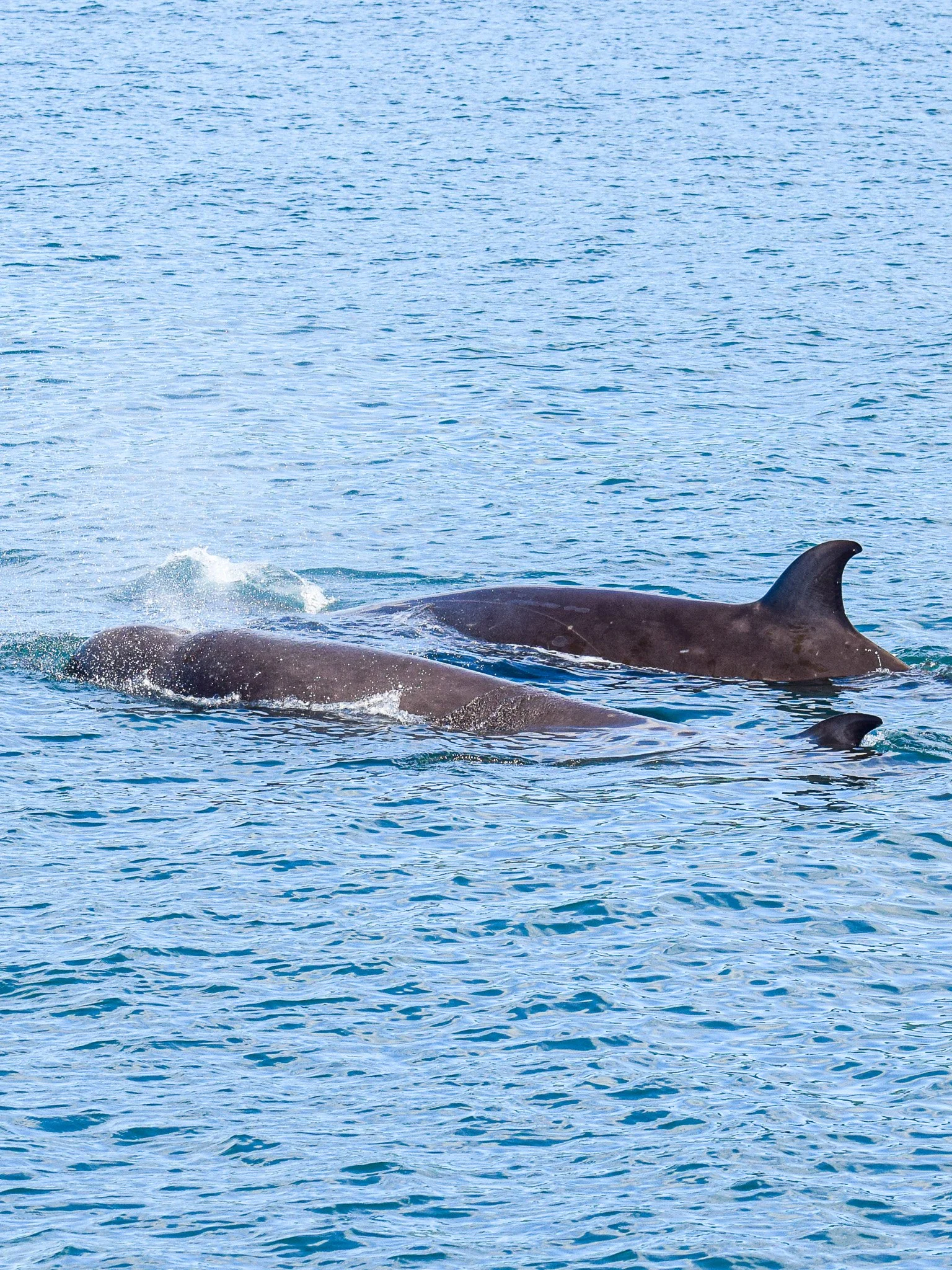
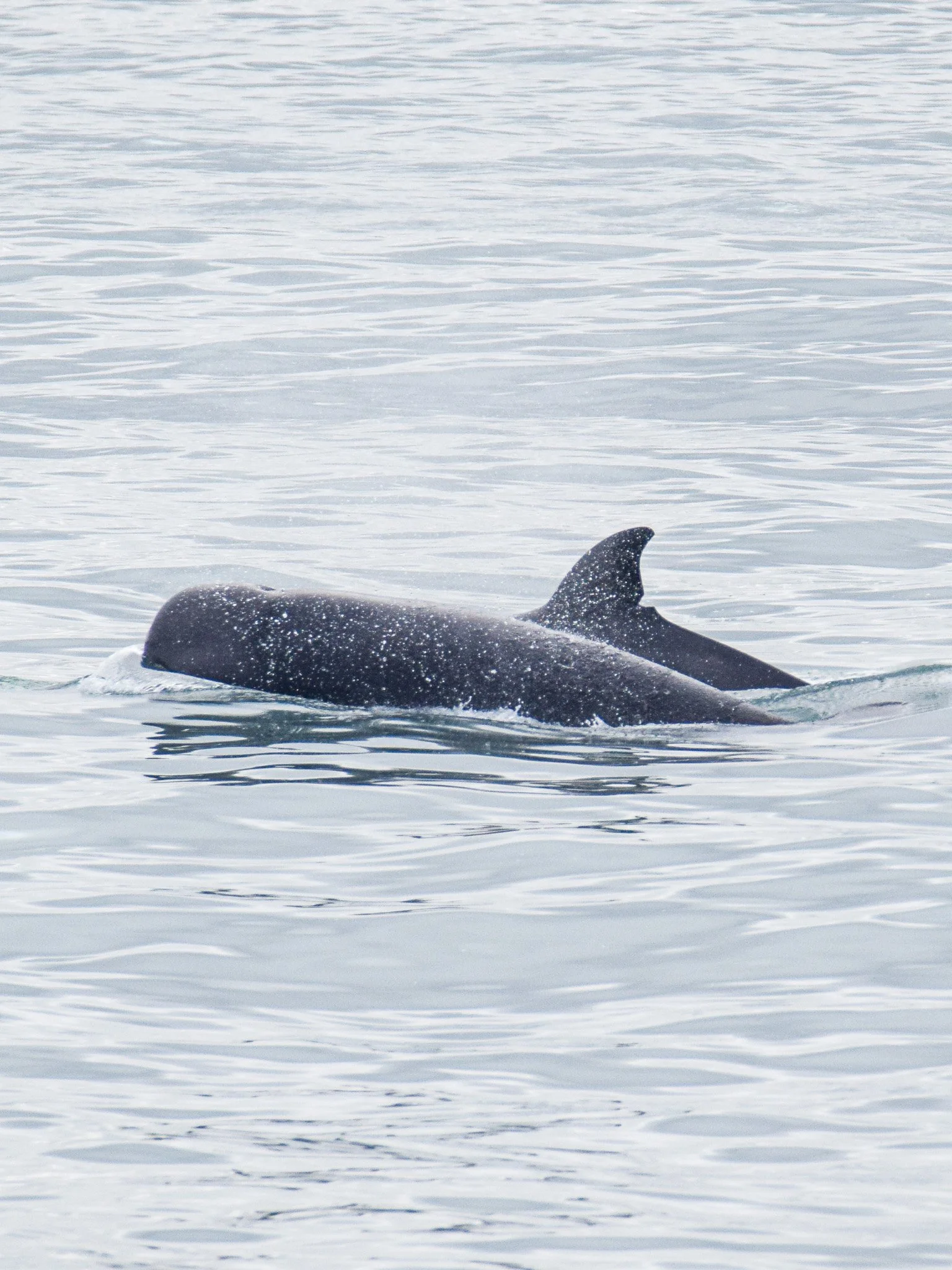
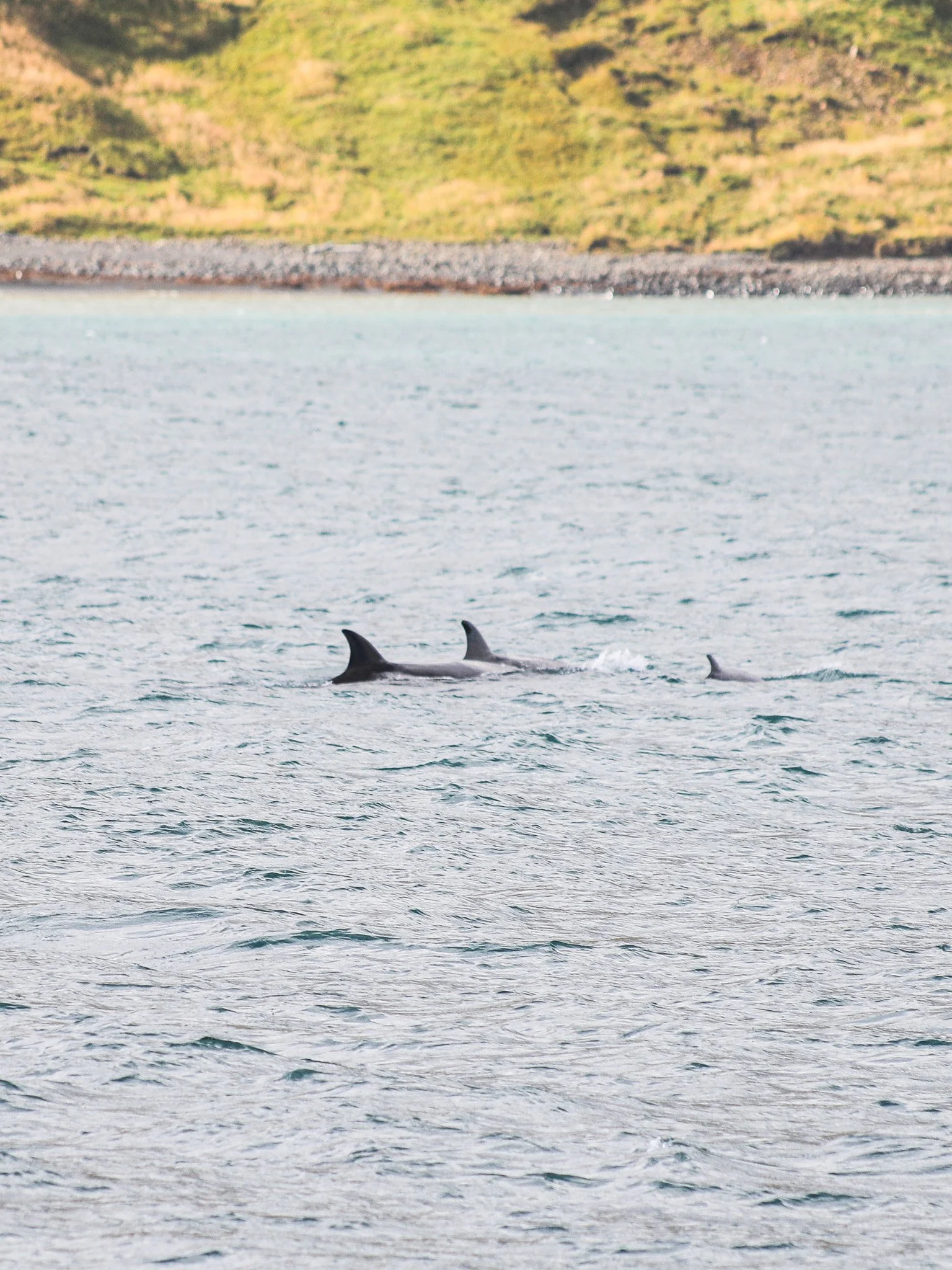
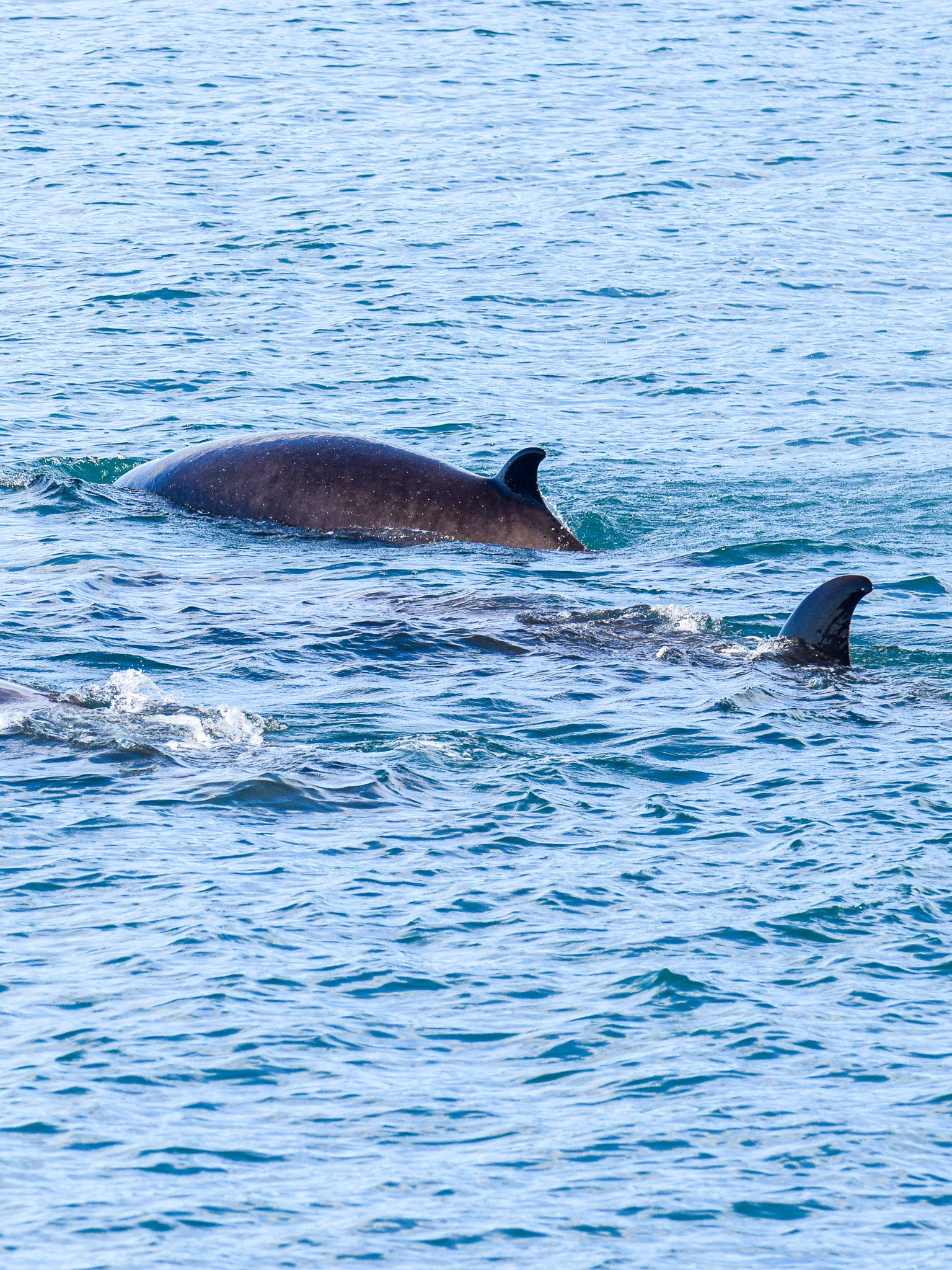
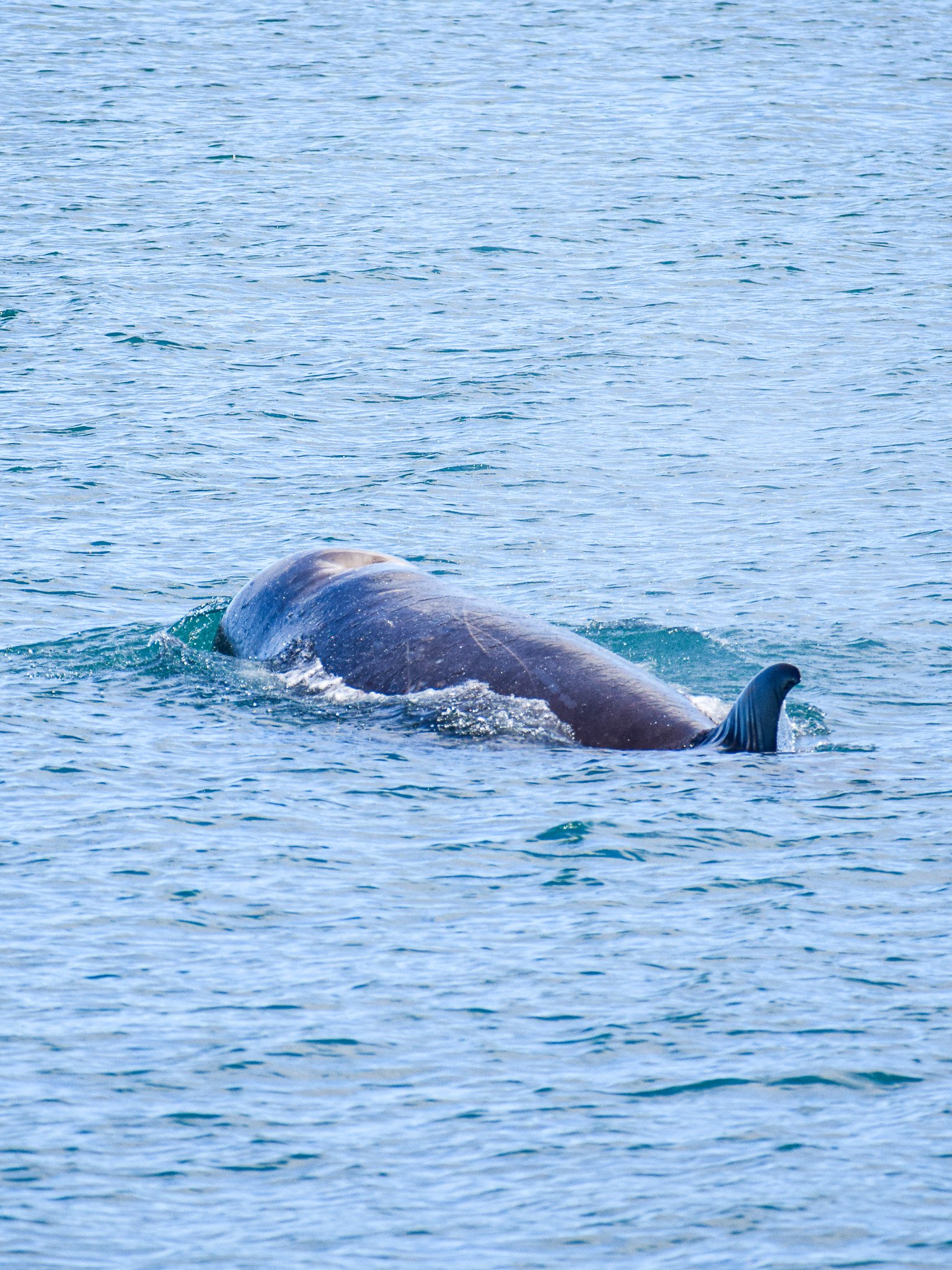
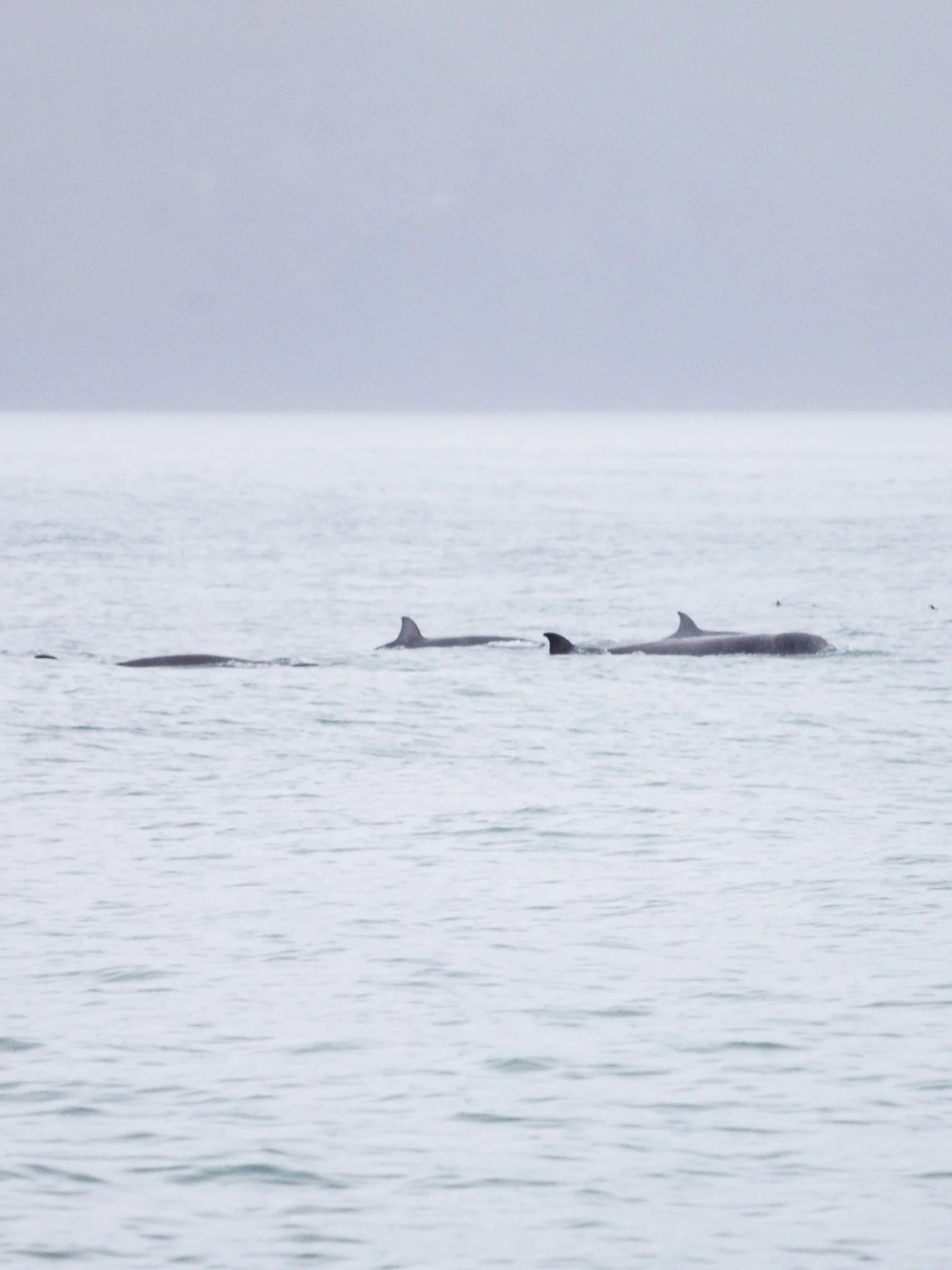
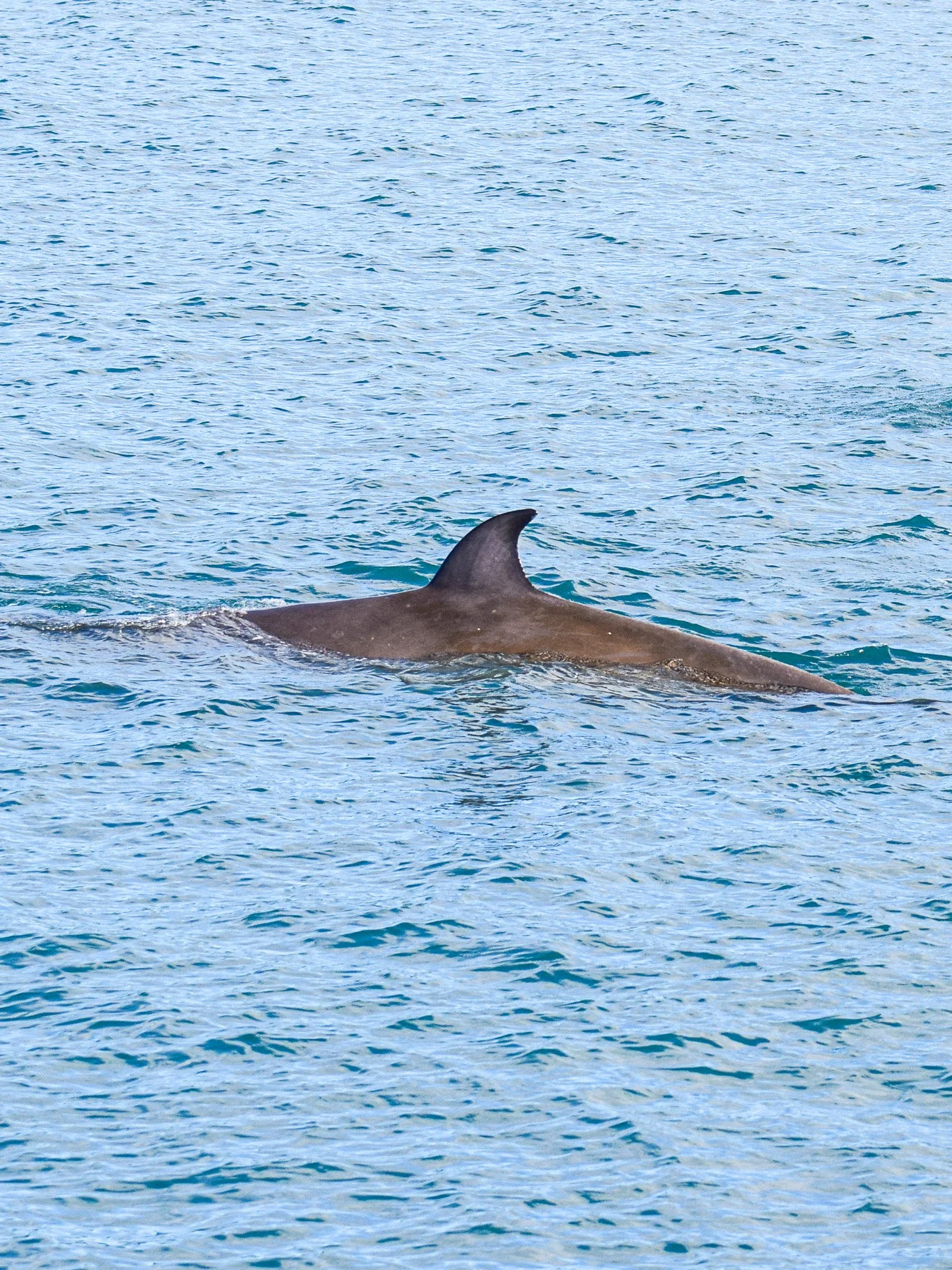
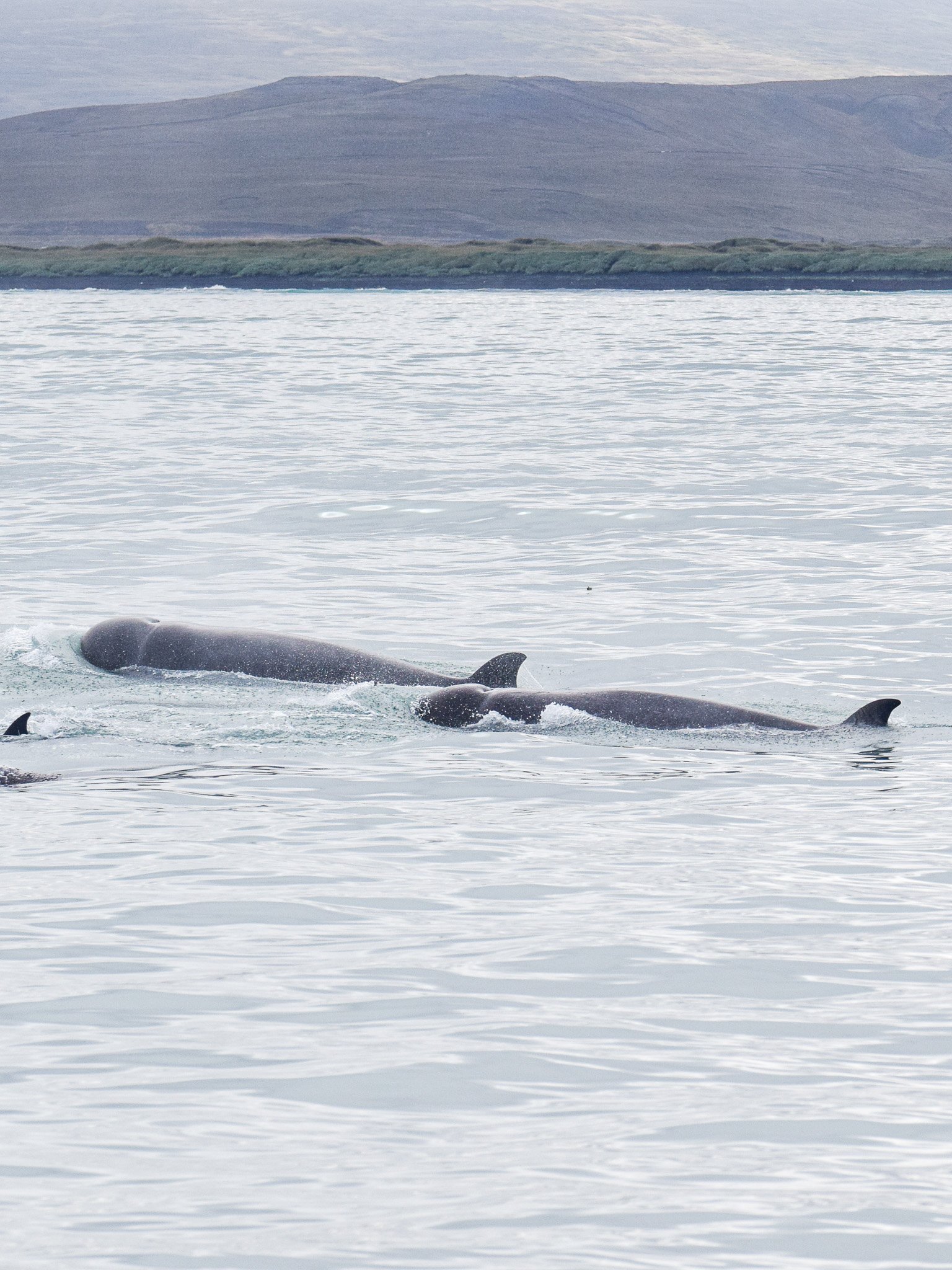
Northern Bottlenose Whales in Iceland
The northern bottlenose whale is one of the least familiar cetaceans in Iceland, deeply specialised and closely tied to the deep ocean. Hyperoodon ampullatus belongs to the group of beaked whales, a family adapted to life at great depths. In the North Atlantic, they are typically found in deep offshore waters, and sightings in Skjálfandi Bay are uncommon and unpredictable.
Their diet consists mainly of squid and other deep-sea organisms, which they hunt at depths often exceeding 1,000 metres. Like sperm whales, they rely on echolocation to navigate and locate prey in the darkness.
Northern bottlenose whales are capable of long dives, followed by extended periods at the surface. During these intervals, they may appear calm and slow-moving, sometimes remaining visible for several minutes.
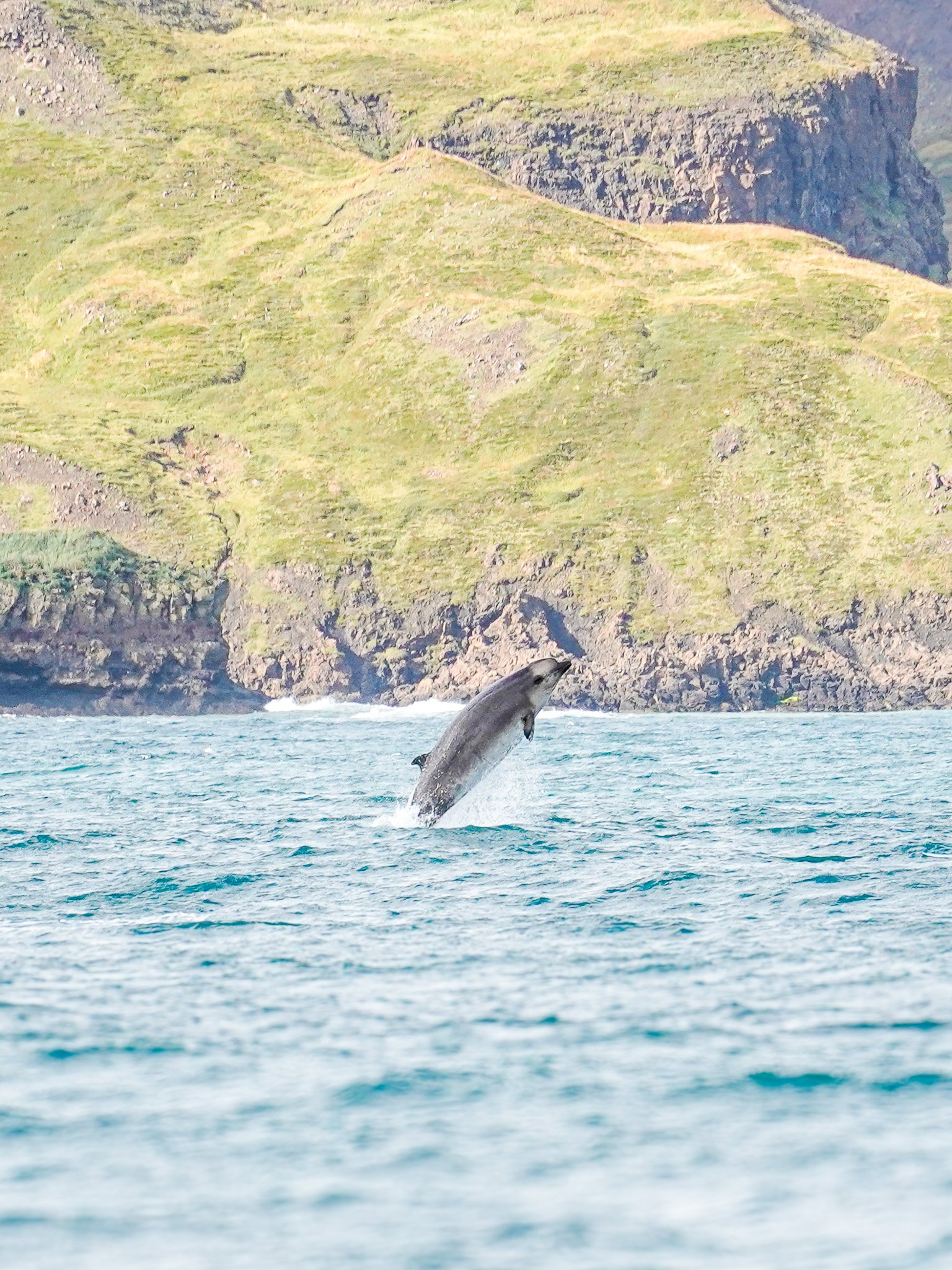
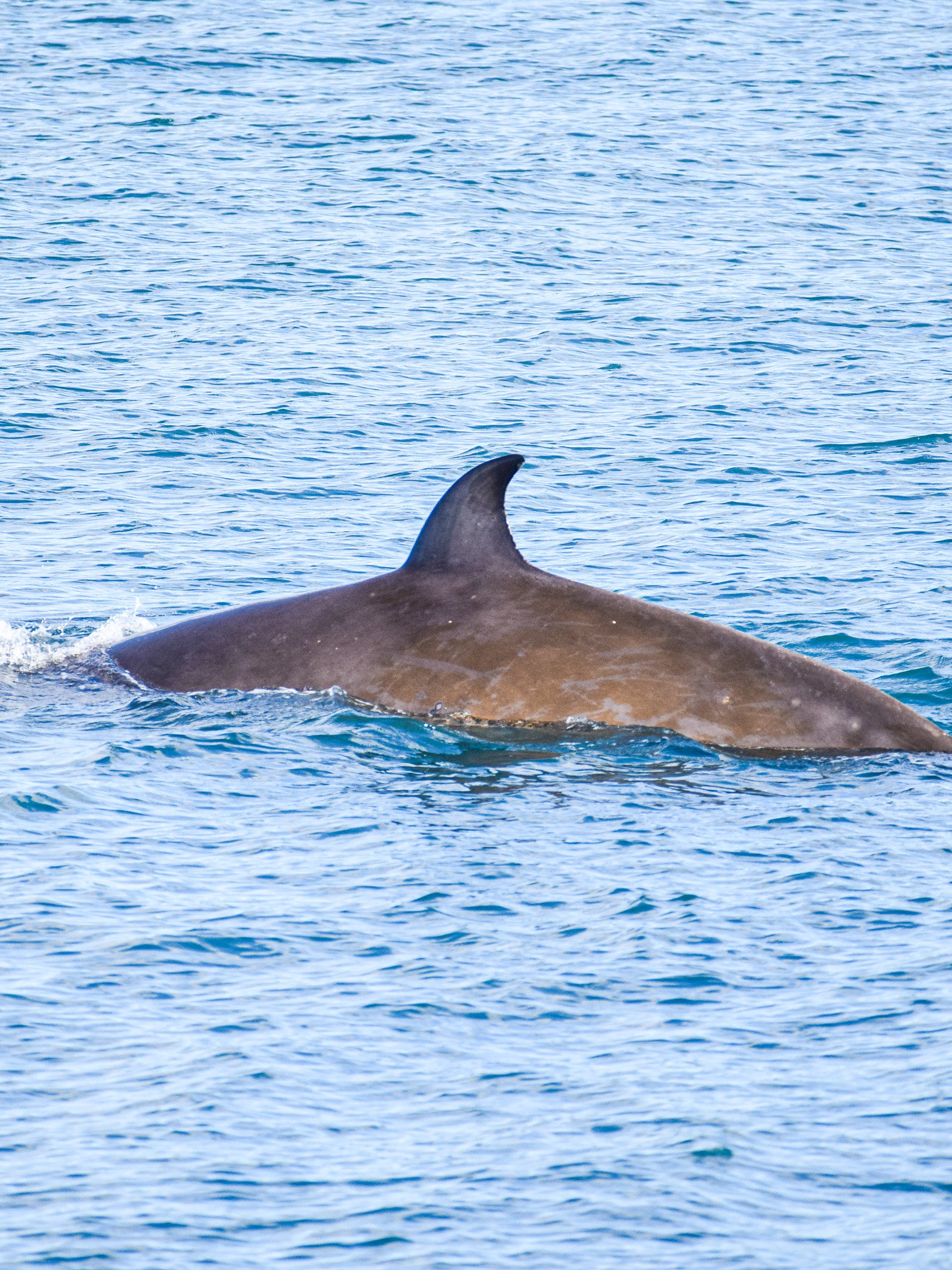
They have a distinctive appearance: a robust body, a relatively small dorsal fin positioned far back, and a bulbous forehead that becomes more pronounced in adult males. Their coloration is generally grey to brownish, sometimes with lighter patches.
One of their most notable traits is curiosity. Historically, they were known to approach vessels, which unfortunately made them vulnerable during whaling periods. Today, this behaviour can still be observed, though sightings are less frequent.
They are usually seen in small social groups, maintaining close proximity to one another at the surface.
An encounter with northern bottlenose whales feels different from most whale sightings: quiet, prolonged, and slightly surreal, as if the deep ocean has briefly come to the surface.