
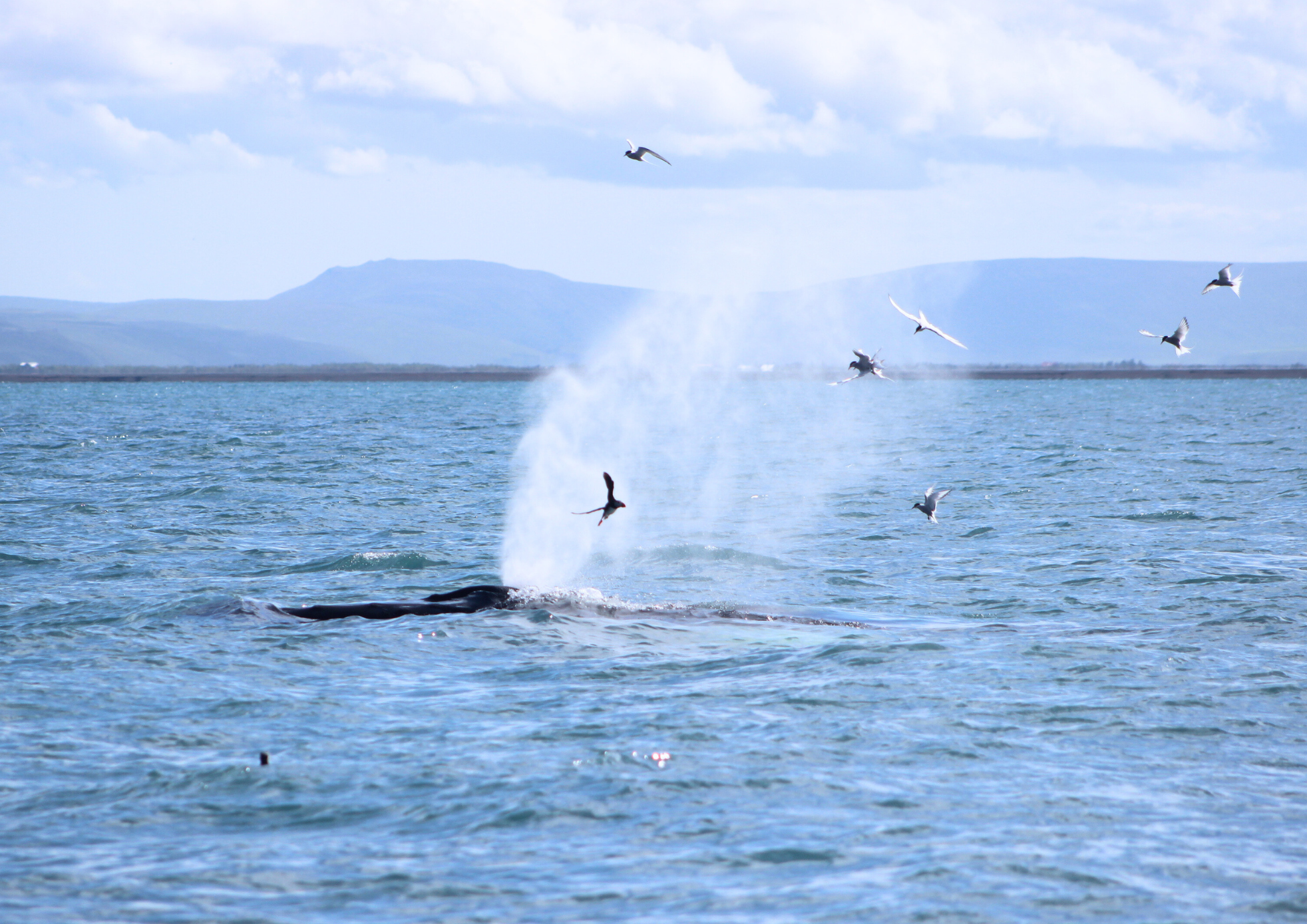
Whales of Húsavík
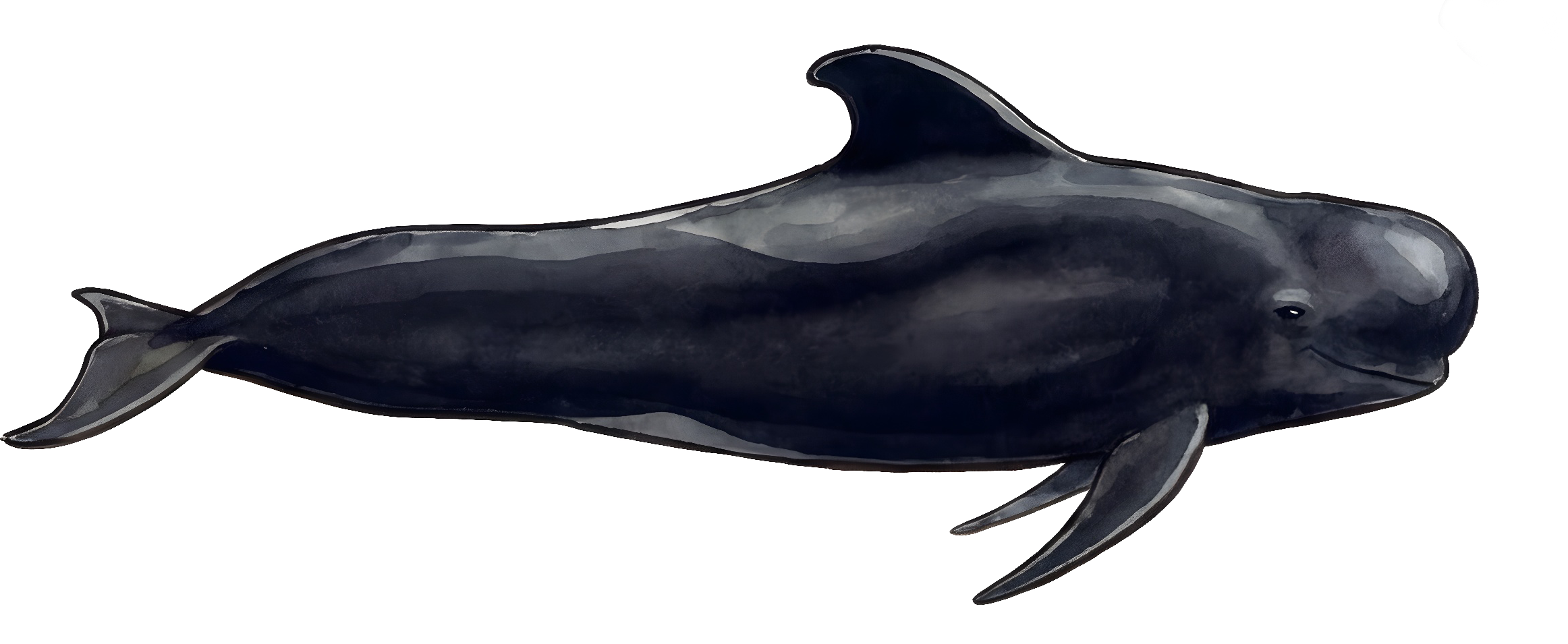
Long-finned Pilot Whale
Globicephala melas (Traill, 1809)
-
Found in the cold waters of the North Atlantic and the Southern Hemisphere
Medium size
Black, blackish, or brownish body colouration
Rounded, bulbous melon
Indistinct beak
Broad-based, backswept dorsal fin far forward
Small to large groups
In Iceland, the subspecies of long-finned pilot whale commonly sighted is generally referred to as North Atlantic Long-finned Pilot Whale (Globicephala melas melas)
There is also some evidence that the North Atlantic subspecies may consist of two ecotypes, one in the NE Atlantic and another in NW Atlantic
-
On average:
Male: 4 to 6,7 m in length
Female: 3,8 to 5,7 m in length
Approximate weight: ca. 1,3 to 2,3 tonnes
Males are usually up to ca. 1 m longer than females
-
Dive time is typically 2-12 minutes
Maximum recorded dive time was 18 minutes
-
Average 60 years for males, and 35–45 years for females
-
IS: Grindhvalur
DE: Grindwal
FR: Globicéphale commun
IT: Globicefalo
ES: Calderón común
PT: Baleia piloto-de-aleta-longa
PL: Grindwal długopłetwy
Pilot Whales in Iceland
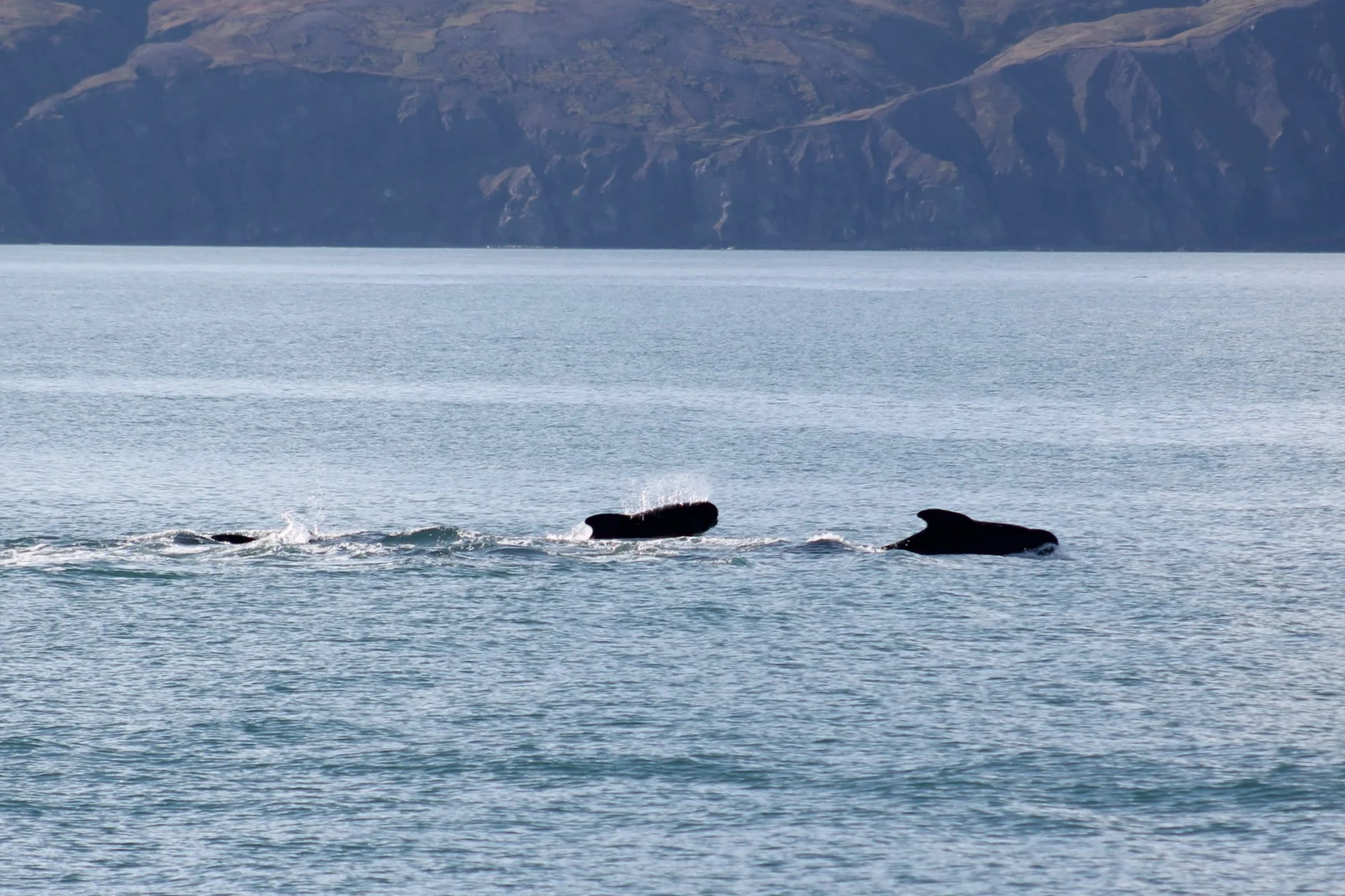
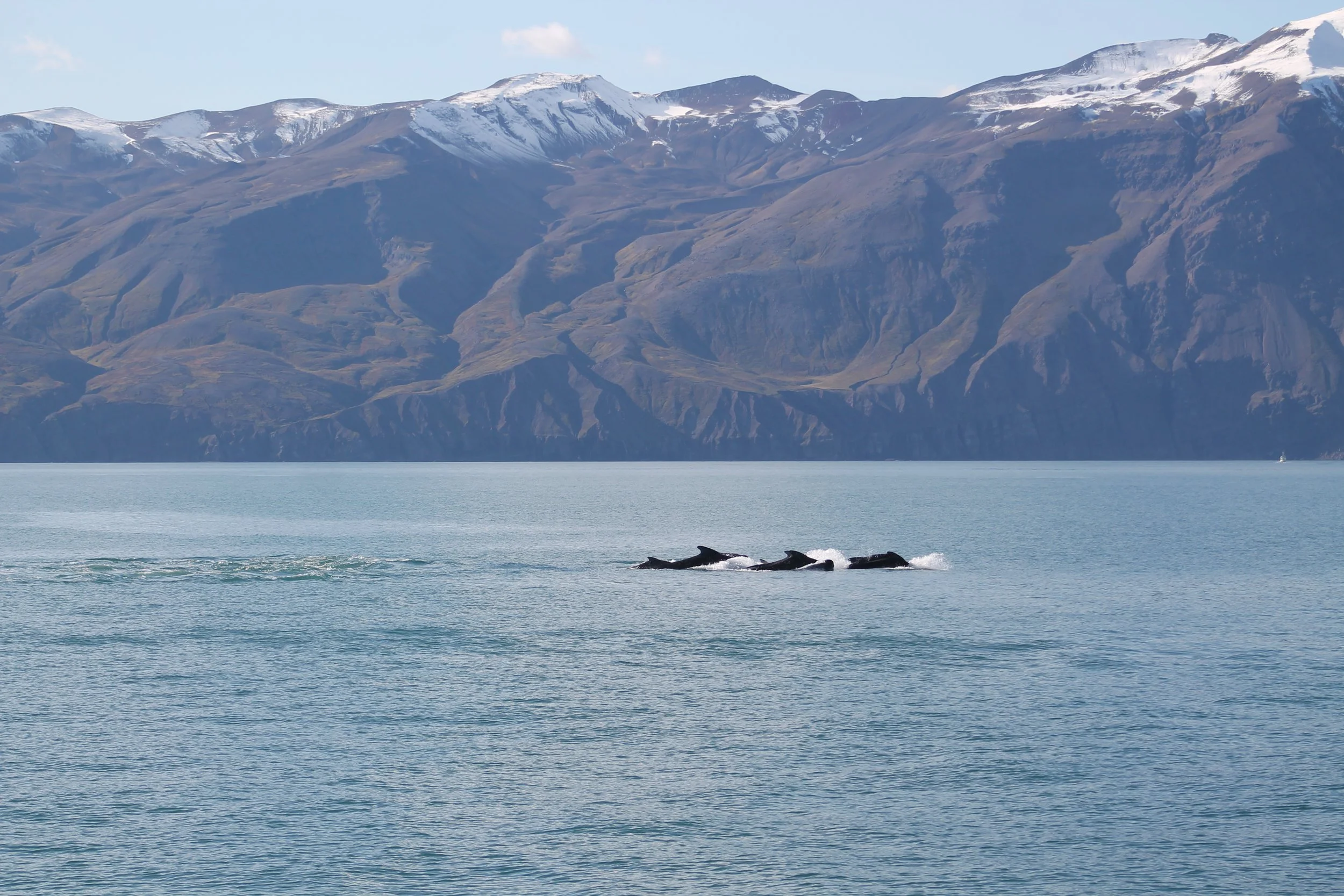
Long-finned pilot whales are defined by their social bonds. Globicephala melas is a medium-sized toothed whale that travels in cohesive groups, often maintaining tight formations at the surface. In Iceland, they are typically found in deeper offshore waters but may occasionally be seen in areas like Skjálfandi Bay.
Their diet consists mainly of squid and fish, and they are capable of deep dives in search of prey. Like other toothed whales, they use echolocation to navigate and hunt.
At the surface, pilot whales appear calm and deliberate. Groups move together, surfacing in synchrony, often giving the impression of a single, coordinated unit. Their rounded head, or melon, and dark body are characteristic features.
Social structure is central to their behaviour. Pods can consist of dozens of individuals, and strong bonds between members mean they often stay together even under stress. This cohesion is thought to play a role in the species’ tendency toward mass strandings.
Encounters with pilot whales are less about individual animals and more about the group as a whole, a collective presence moving through the water.