
Whales of Húsavík
Sei Whale
Balaenoptera borealis (Linnaeus, 1828)
-
Sub-tropical to sub-polar, offshore waters worldwide
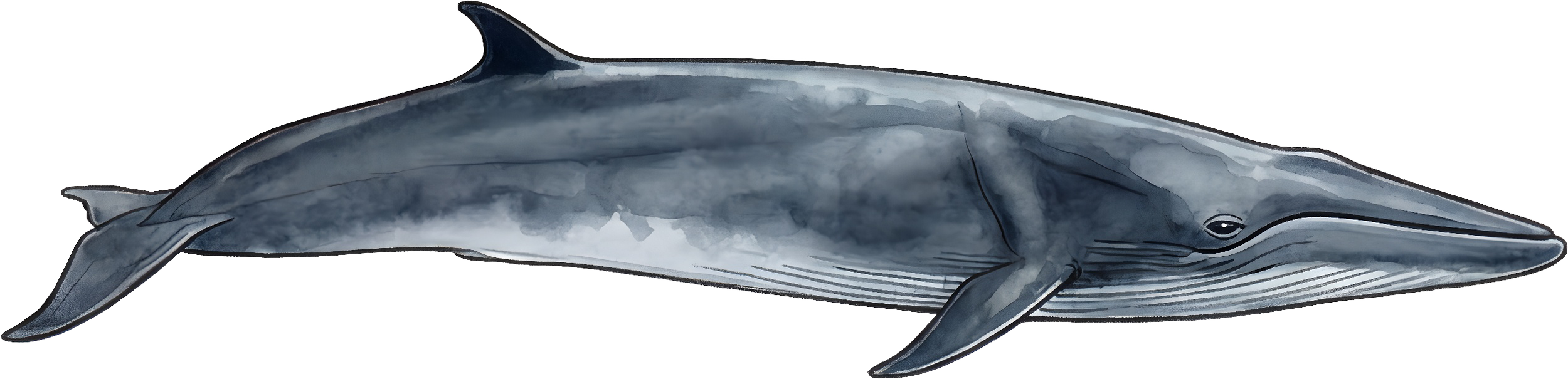
Large size
Sleek, streamline body
Symmetrical head colouring
Dark upper side, lighter under side
Pale “brush strokes” on both sides of the body
May have fin-whale-like chevron (U-shaped)
Single prominent ridge on rostrum
Rostrum has downturned tip
Tall, erect dorsal fin (ca. 55 cm)
In Iceland, the subspecies of sei whale commonly sighted is generally referred to as Northern Sei Whale (Balaenoptera borealis borealis)
-
On average:
Male: 12 to 15 m
Female: 13 to 16 m
Approximate weight for both sexes: 16 to 27 tonnes
-
Dive time is typically around 13 minutes
-
At least 50–60 years
The oldest recorded individual was 74 years old
-
IS: Sandreyður
DE: Seiwal
FR: Rorqual boréal
IT: Balenottera boreale
ES: Rorcual boreal
PT: Baleia sei
PL: Płetwal sejwal
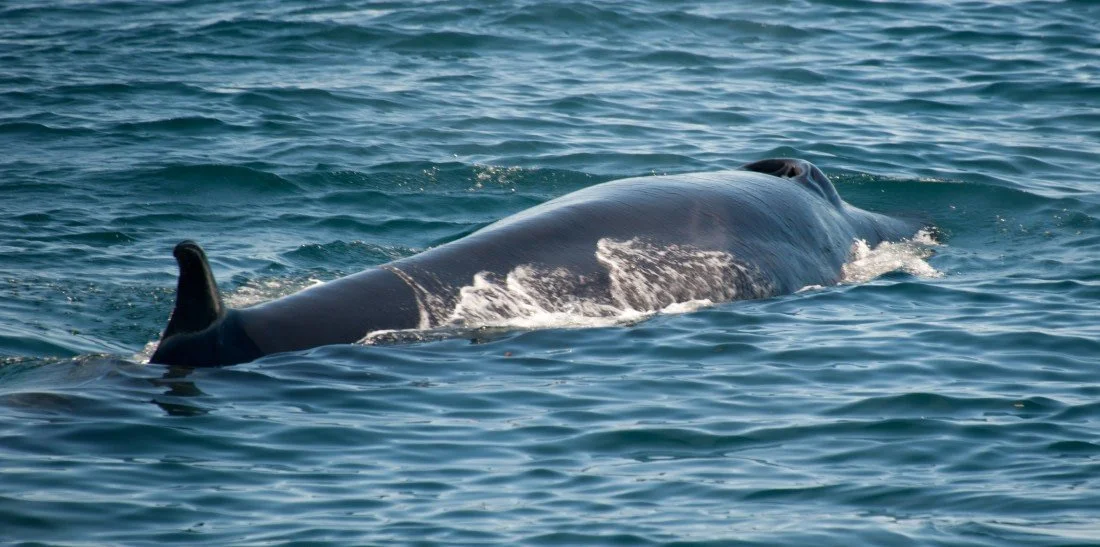
Sei Whales in Iceland
The sei whale is one of the ocean’s quieter mysteries. Fast, elegant and often gone before you fully realise what you’ve seen. Balaenoptera borealis is the third largest rorqual, yet far less commonly observed than blue or fin whales. In Iceland, sei whales are considered occasional visitors, more often associated with offshore waters than sheltered bays like Skjálfandi. When they do appear, sightings tend to be brief and fleeting.
Unlike other large baleen whales that specialise in lunge feeding, sei whales are more flexible. They often feed by skimming near the surface, filtering out copepods and other small planktonic organisms. In some conditions, they also use lunge-feeding behaviour, though less dramatically than their larger relatives. Their presence is closely linked to plankton blooms, which can vary significantly from year to year.
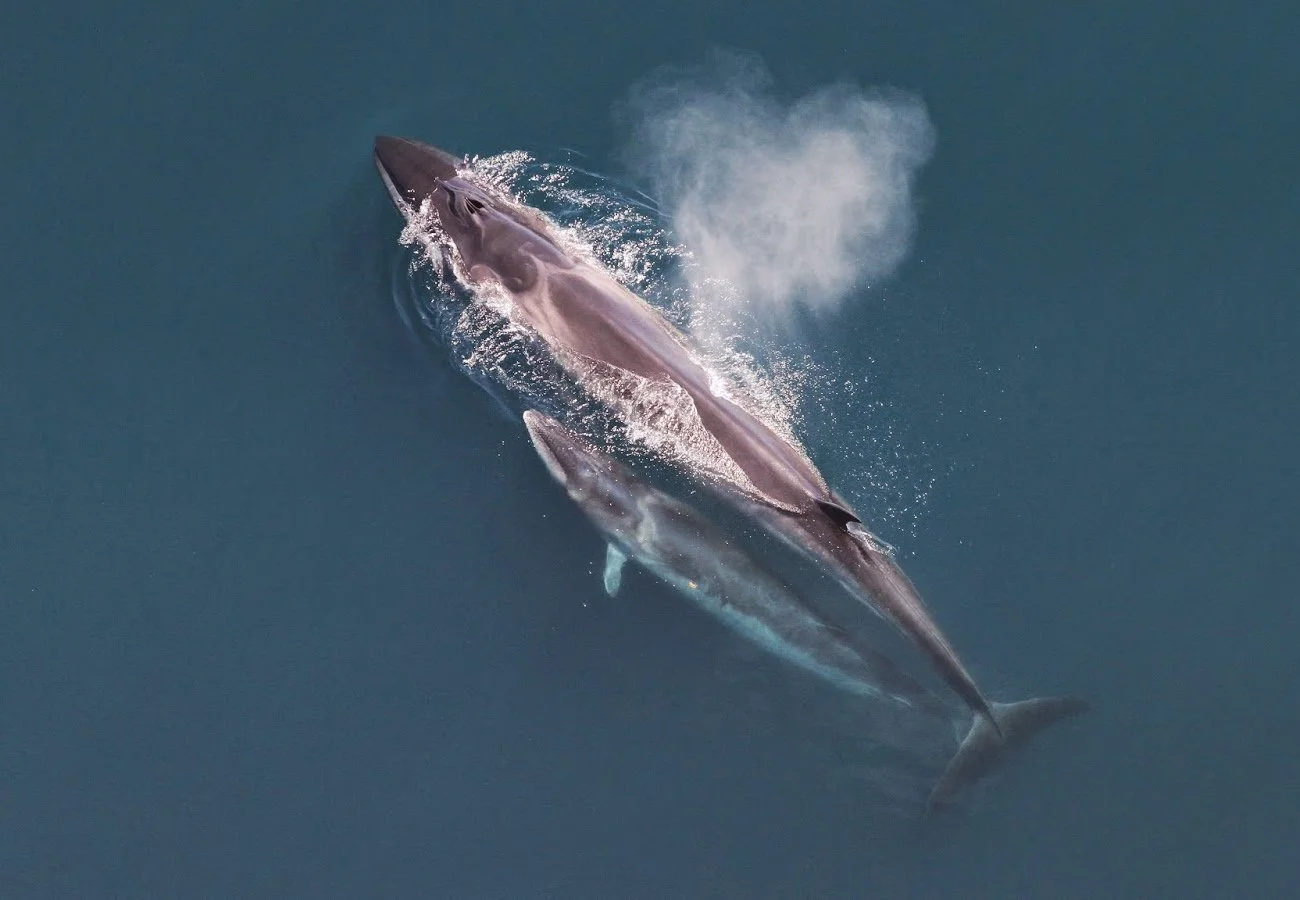
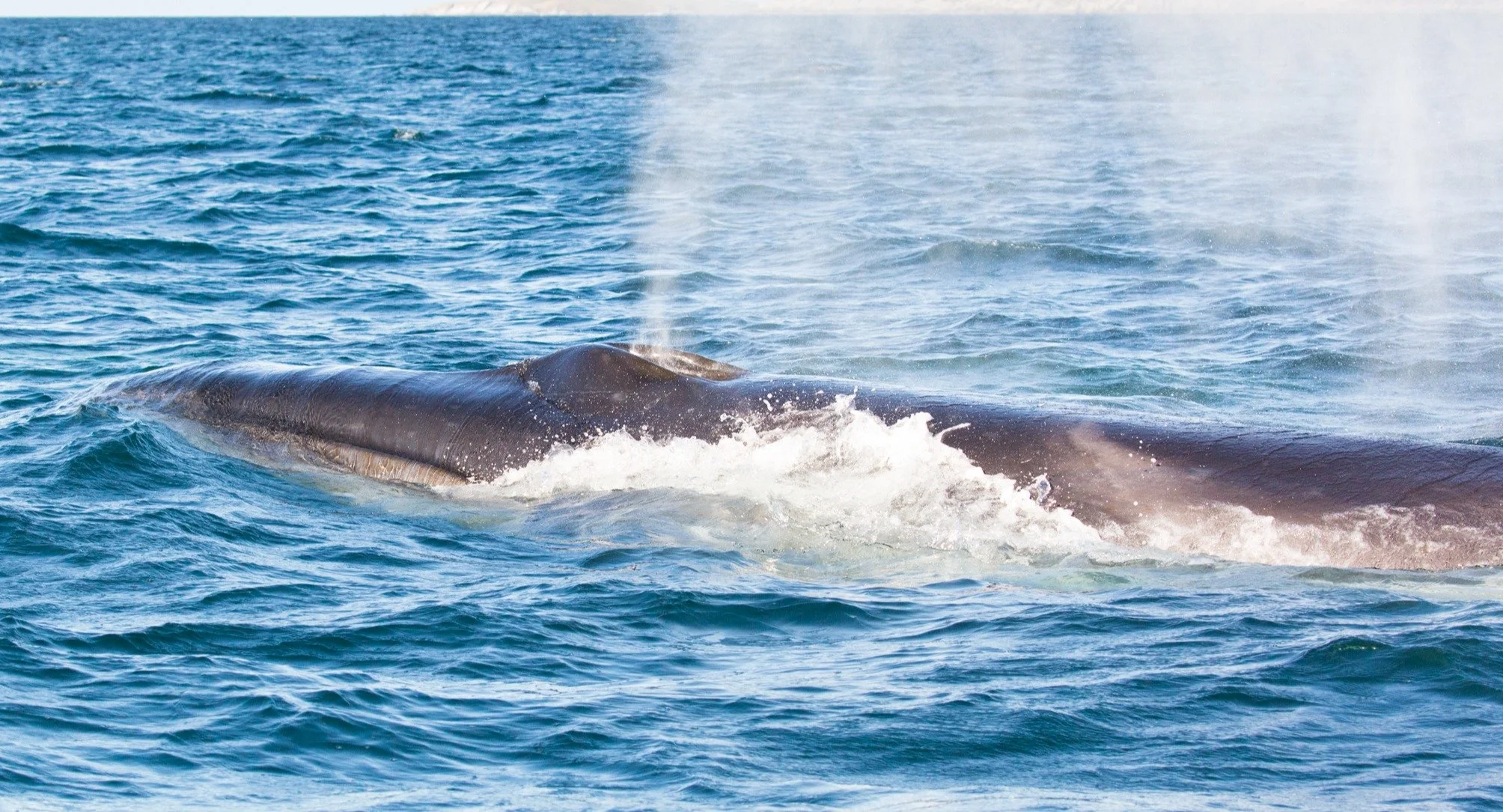
They are among the fastest whales, capable of sustained speed, and they tend to avoid vessels. This makes encounters feel more like glimpses than prolonged observations. A smooth, low-profile surfacing, a quick sequence of blows, and then they are gone.
At the surface, their blow is lower and less defined than that of blue or fin whales. Their back is sleek, with a relatively tall dorsal fin. They rarely show their flukes when diving, and their surfacing patterns are short and efficient.
Sei whales are usually seen alone or in small, fluid groups, although larger aggregations can form in highly productive feeding areas.
Seeing a sei whale in Skjálfandi Bay is not about spectacle, it’s about timing. Being in the right place, at the right moment, when one of the least-seen whales in Iceland passes quietly through.