
Whales of Húsavík
Sperm Whale
Physeter macrocephalus (Linnaeus, 1758)
-
Deep, ice-free oceanic waters worldwide
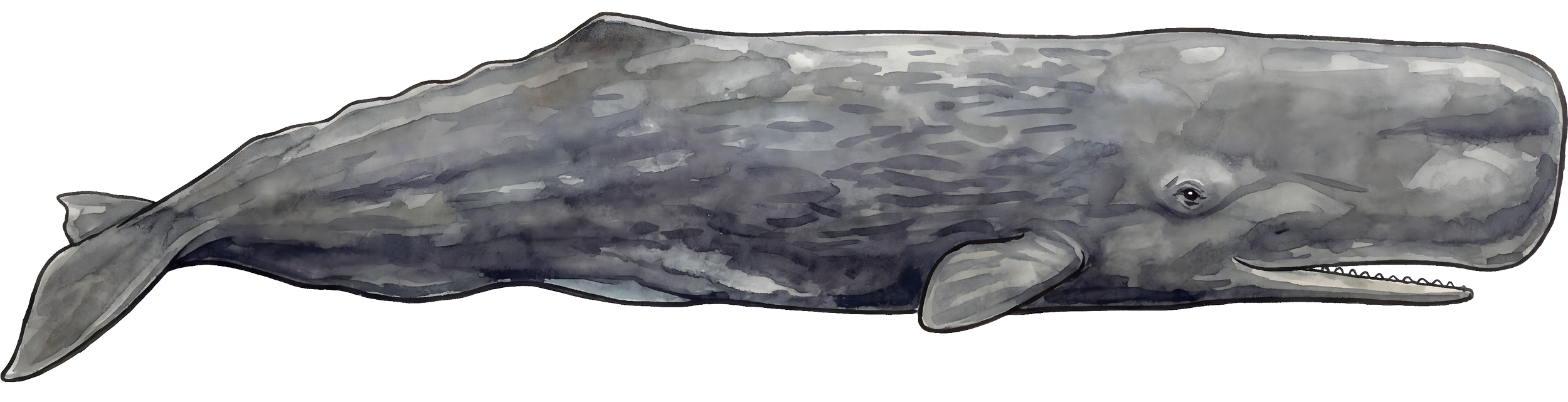
Large to extra-large size
Primarily dark grey
Huge squarish head, ca. 25-36 % of total length
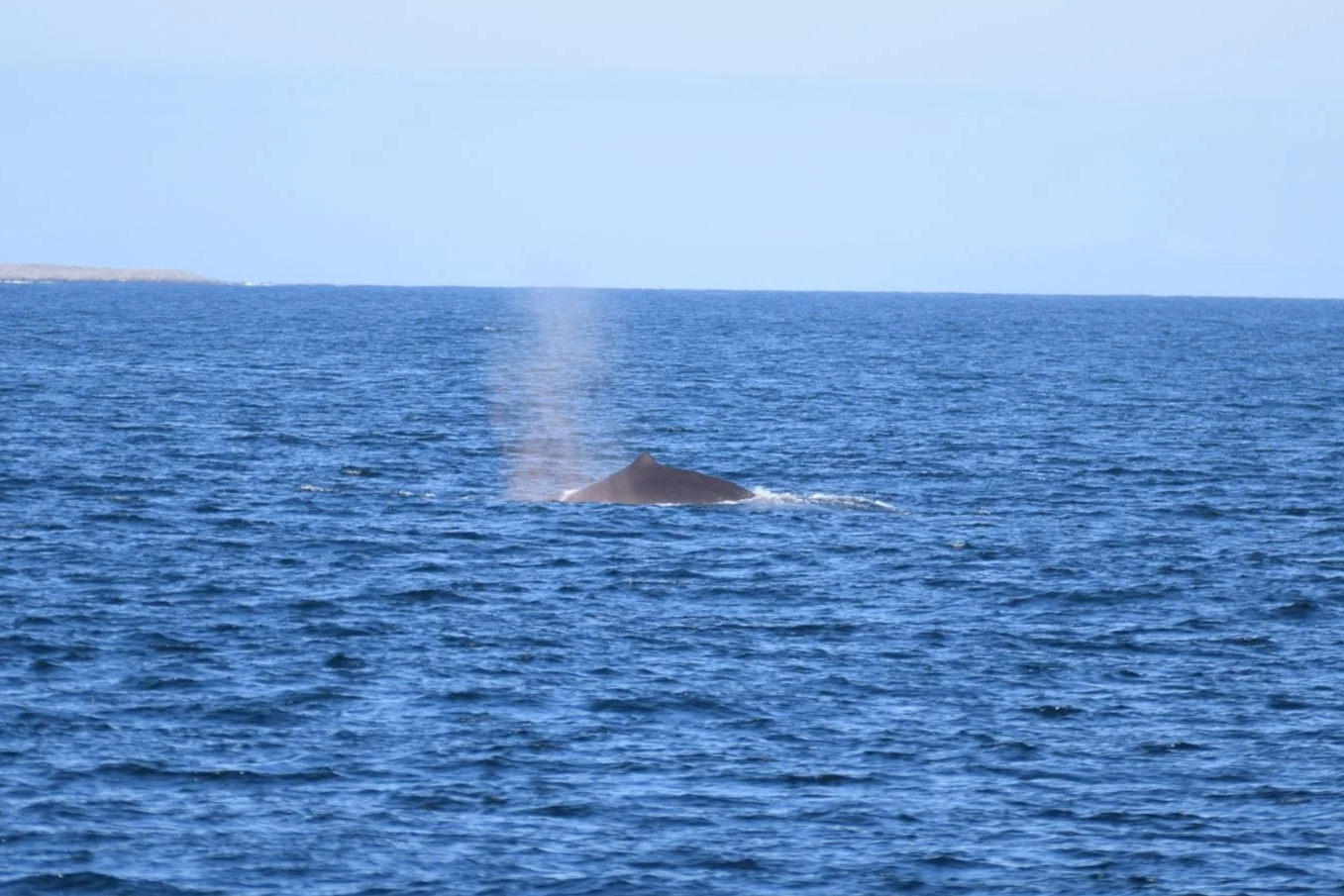
Thick, low, rounded dorsal fin
Large bumps (“knuckles”) from dorsal fin to flukes
Wrinkly, prune-like skin
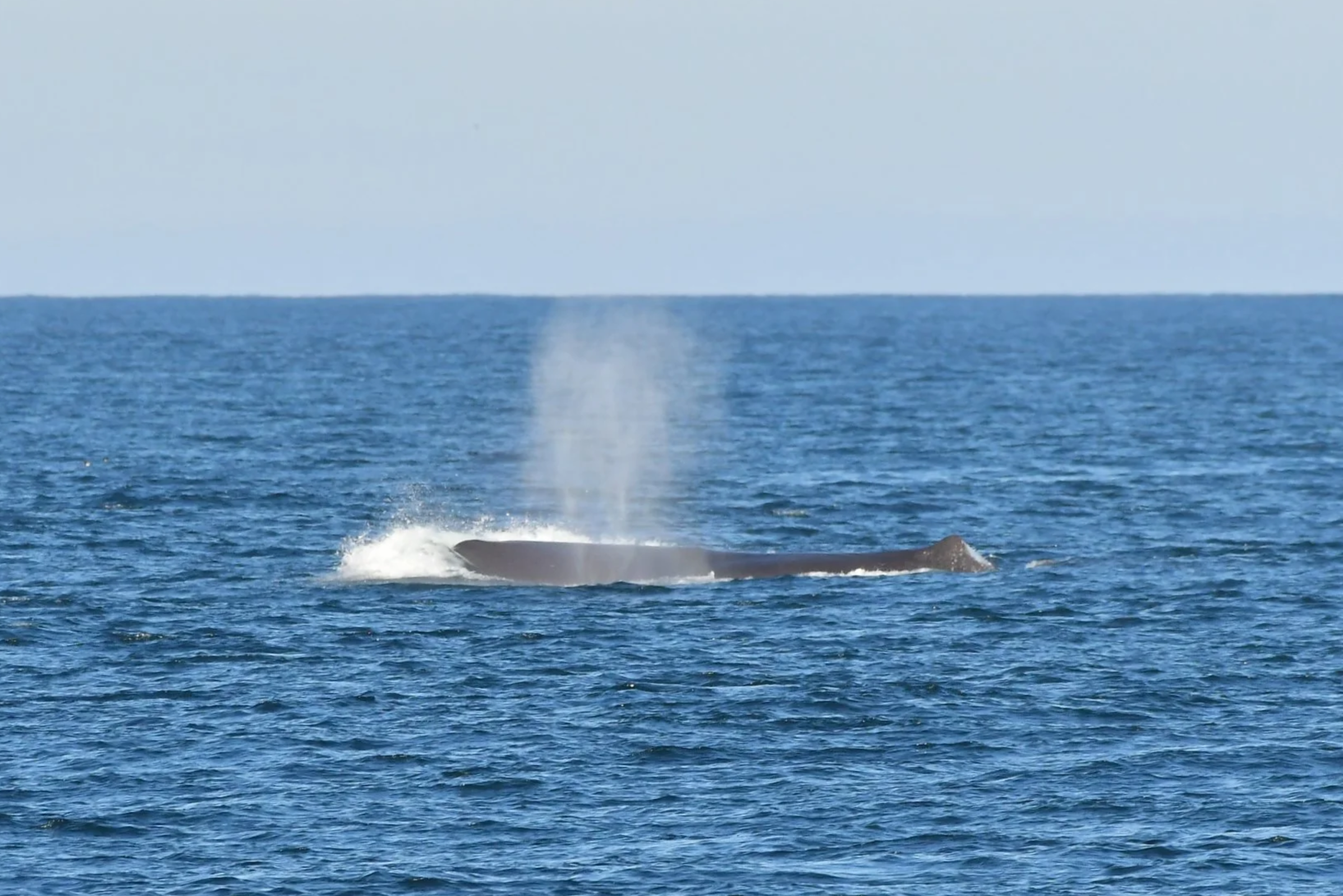
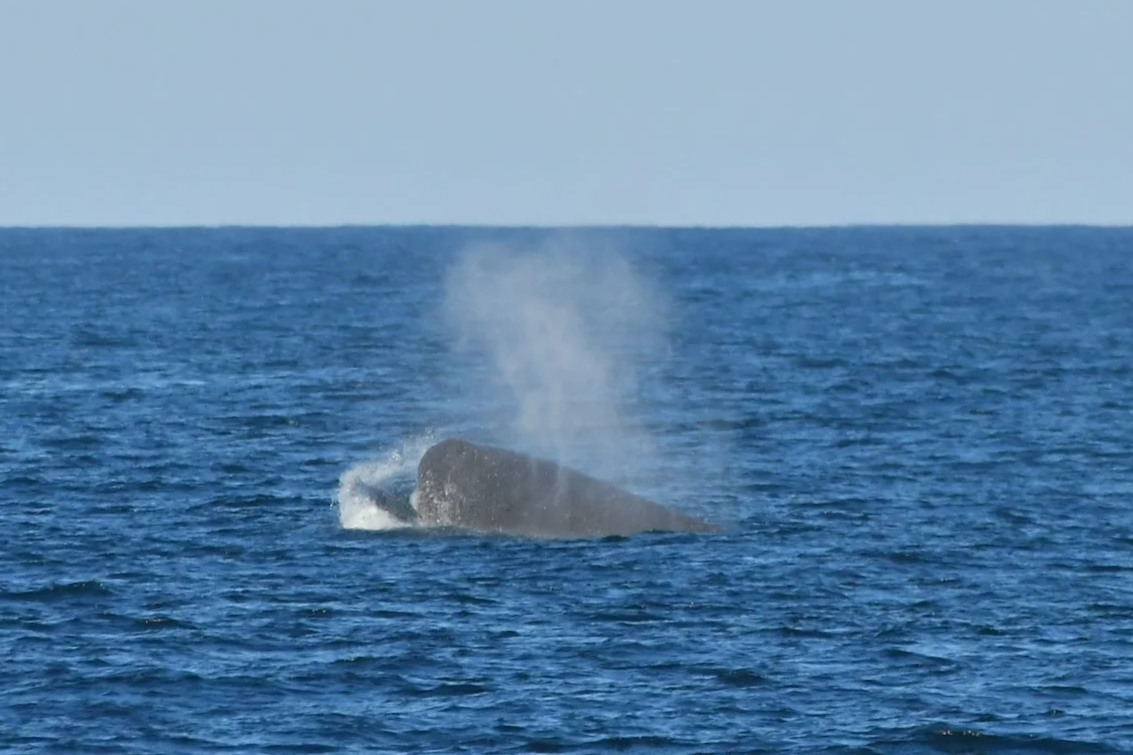
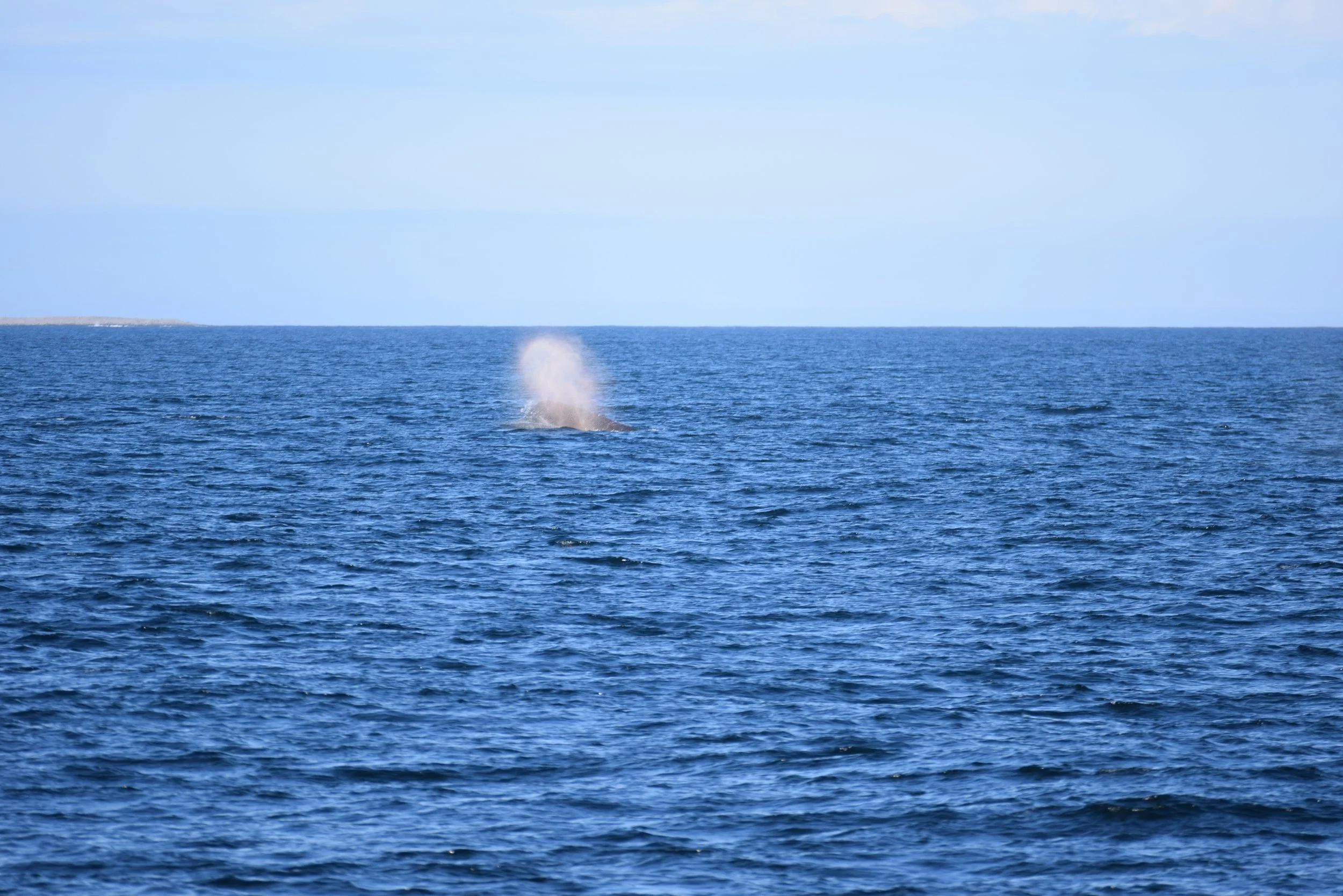
Bushy blow directed forwards and to left
Often motionless (or swims leisurely) at surface
Usually, flukes
-
Approximate length:
Male: 14 to 16,5 m
Female: 10,5 to 12 m
Approximate weight:
Male: 35 to 55 tonnes
Female: 10 to 20 tonnes
Extreme sexual dimorphism, with adult males typically weighing 3 times as much as adult females, and ca. 40 % longer
-
Feeding dives typically last 30-50 minutes, ranging from at least 15-60 minutes
Maximum recorded dive time was 138 minutes
-
At least 60-70 years, possibly longer
-
IS: Búrhvalur
DE: Pottwal
FR: Cachalot
IT: Capodoglio
ES: Cachalote
PT: Cachalote
PL: Kaszalot
Sperm Whales in Iceland
The sperm whale belongs to a different world, the deep ocean, far below the reach of light. Physeter macrocephalus is the largest toothed whale on Earth, and one of the most remarkable divers in the animal kingdom. Adult males can reach up to 18 metres in length, with a massive square-shaped head that makes up a third of their body. In Iceland, sperm whales are typically found in deeper offshore waters and are only occasional visitors to areas like Skjálfandi Bay.
Their lives are shaped by depth. Sperm whales hunt squid, including large deep-sea species, descending to depths of over 1,000 metres in complete darkness. To navigate and hunt in these conditions they rely on echolocation, producing powerful clicks that are among the loudest sounds made by any animal.
Their dive patterns are long and deliberate. A typical dive can last 30 to 60 minutes, followed by a recovery period at the surface. During this time, they rest, breathe, and prepare for the next descent.
At the surface, they are unmistakable. Their blow is angled forward and to the left, unlike the vertical blows of baleen whales. The head is massive and squared, and the body appears more wrinkled than streamlined. When diving, they often lift their tail flukes high, revealing a clear silhouette before disappearing into the depths.
Social structure varies. Females and juveniles live in stable family groups, while large adult males are more solitary and range into higher latitudes like Iceland.
Seeing a sperm whale is like seeing the surface of something much larger. Most of its life remains hidden, far below, in a world we rarely witness.